
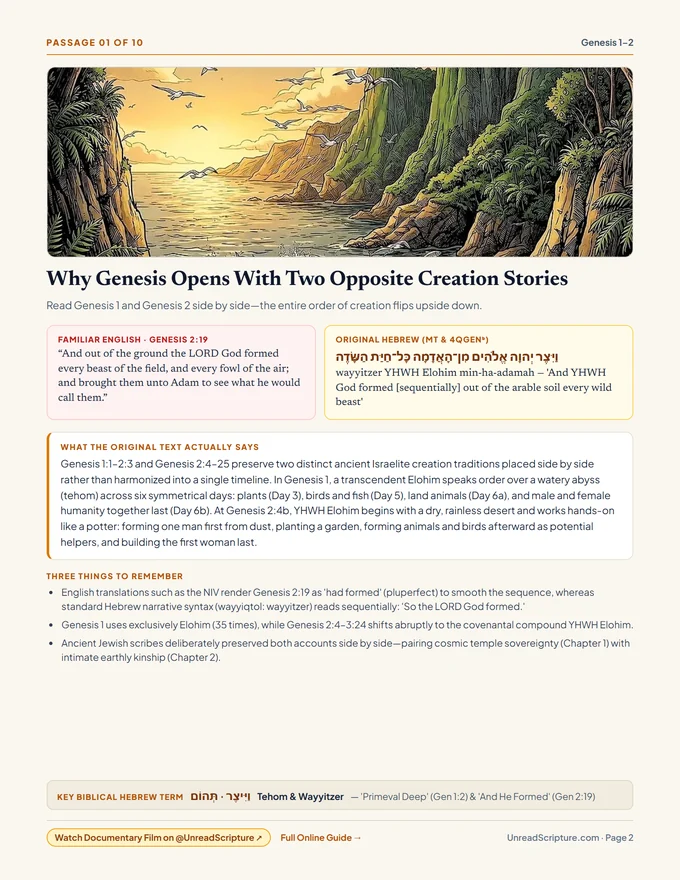
Why Genesis Opens With Two Opposite Creation Stories
Genesis 1 and Genesis 2 place plants, animals, birds, and humanity in opposite orders—and Hebrew syntax reads sequentially, not 'had formed.'
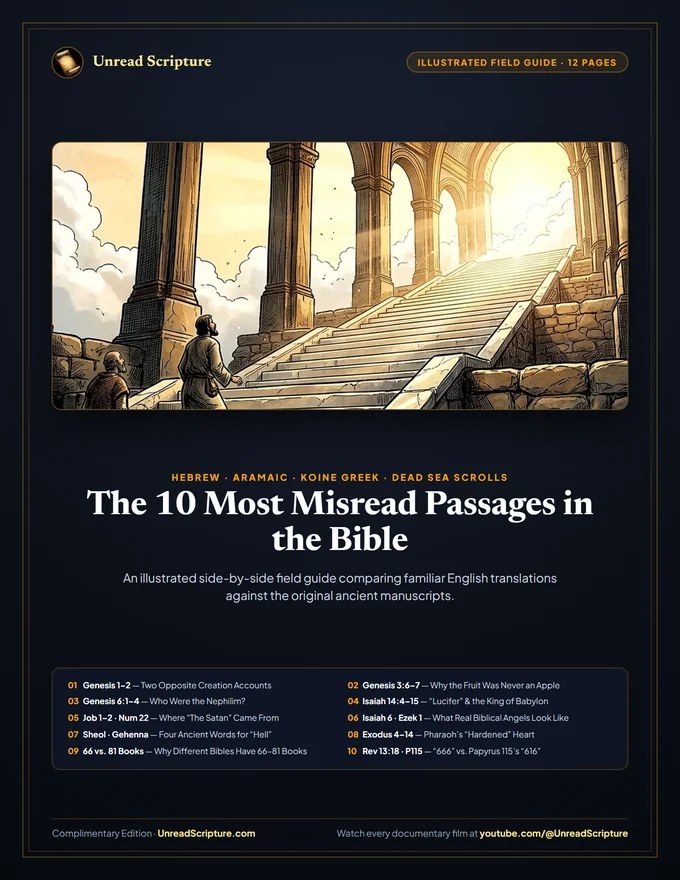 12-PAGE PDF · FREE
Keep our side-by-side Hebrew & Greek manuscript reference on your phone, tablet, or desk—100% free.
Download the 12-page PDF below — and subscribe on YouTube for new films.
Every chapter fits cleanly on one illustrated reference page—designed for phones, tablets, or crisp home printing.
Genesis 1 and Genesis 2 place plants, animals, birds, and humanity in opposite orders—and Hebrew syntax reads sequentially, not 'had formed.'
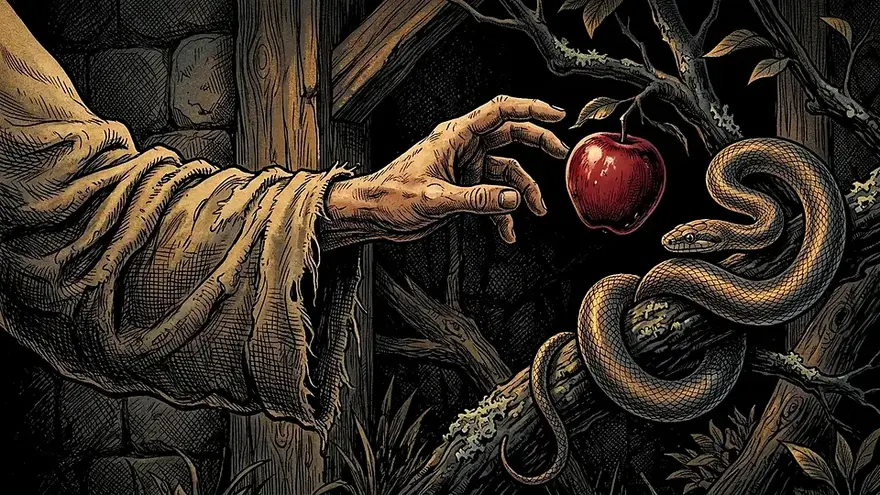
Genesis only calls it pərî (‘fruit’). The apple arrived 1,000 years later from a Latin pun: mālum (evil) vs. mālum (apple).
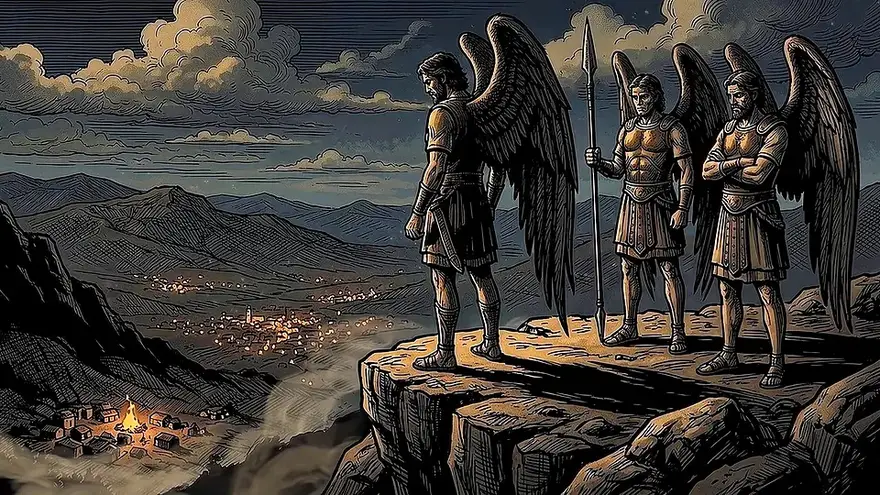
Ancient Jewish texts (1 Enoch & Dead Sea Scrolls) read Genesis 6 literally as heavenly Watchers—a tradition Jude 14 directly quotes.
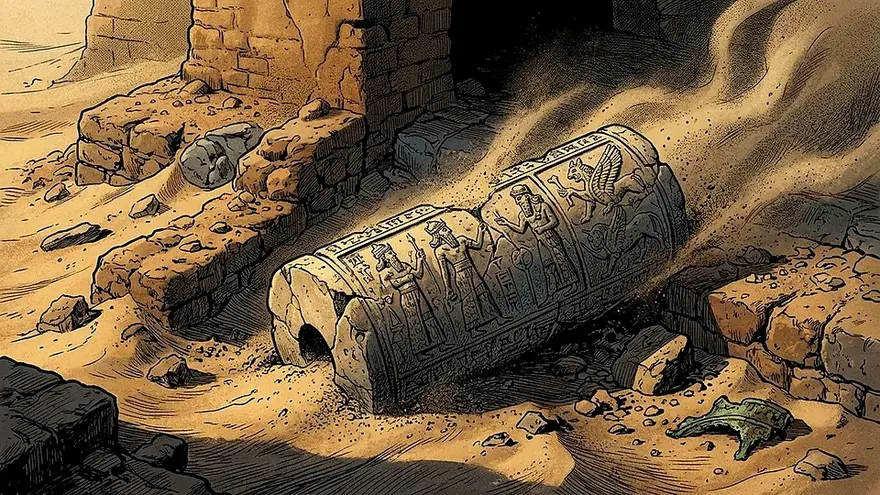
Hebrew hêlēl (‘Shining Morning Star’) mocked a human Babylonian tyrant. Jerome’s 400 CE Latin word ‘lucifer’ only became a name centuries later.
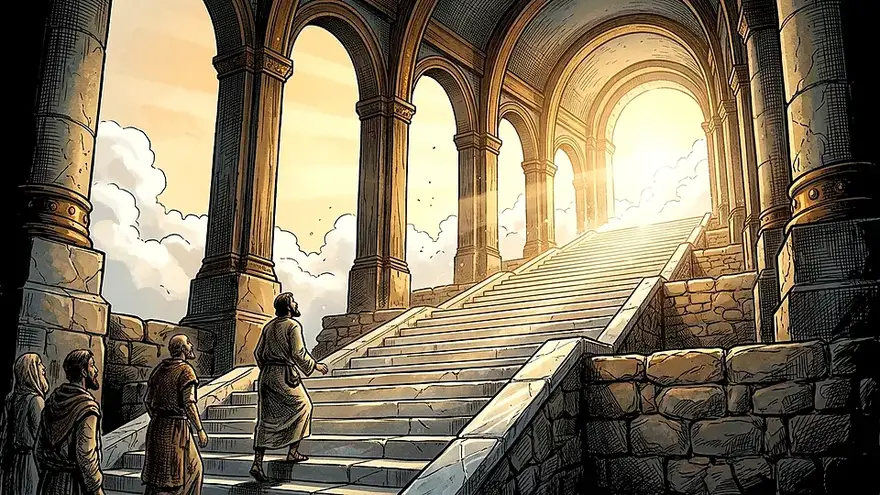
In the Old Testament, ha-śāṭān has a definite article (‘the adversary’)—a courtroom prosecutor title even applied to the Angel of the LORD.
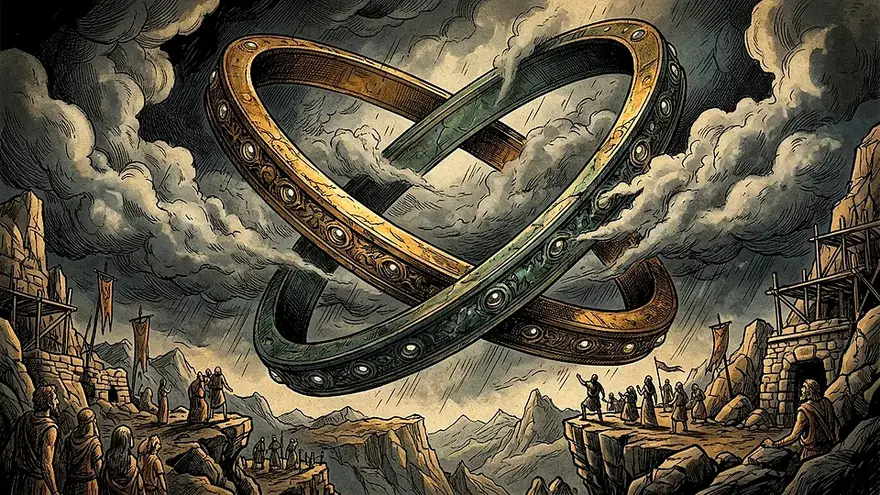
Ordinary messengers (mal’ākîm) looked human—while throne-room Seraphim, Cherubim, and Ophanim were six-winged fiery beings and eyed wheels.
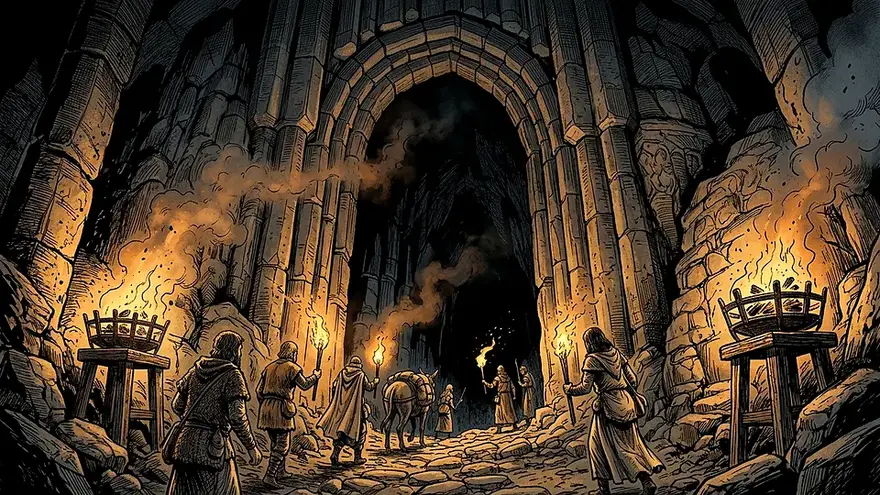
Older English Bibles merged the silent Hebrew grave (Sheol), a Jerusalem valley (Gehenna), Greek Hades, and Tartarus into a single word.
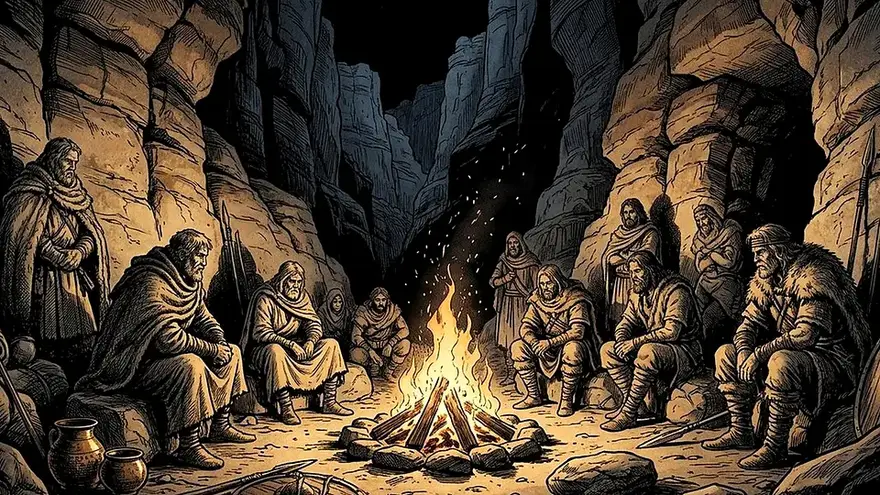
Pharaoh makes his own heart ‘heavy’ (kābēd) first—a direct callback to the Egyptian Weighing of the Heart ceremony.
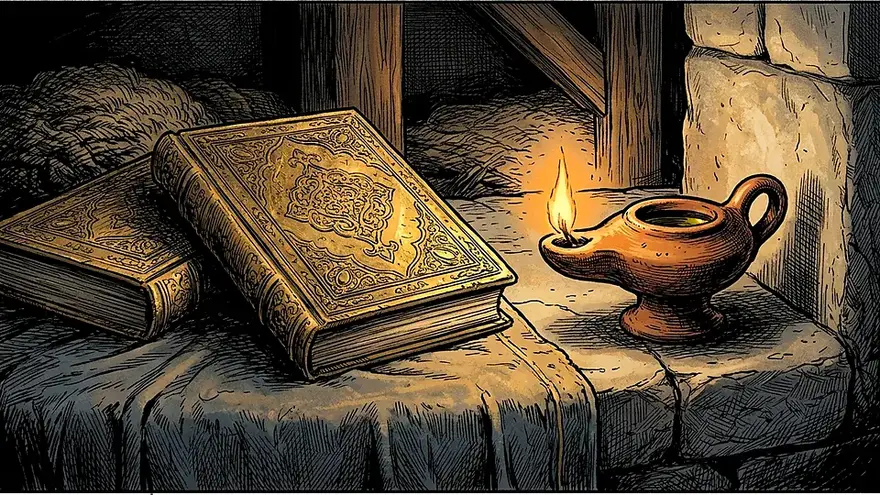
No secret council ‘banned’ hidden Gospels—Protestant, Catholic, Orthodox, and Ethiopian canons split over the Greek Septuagint and Second Temple books.
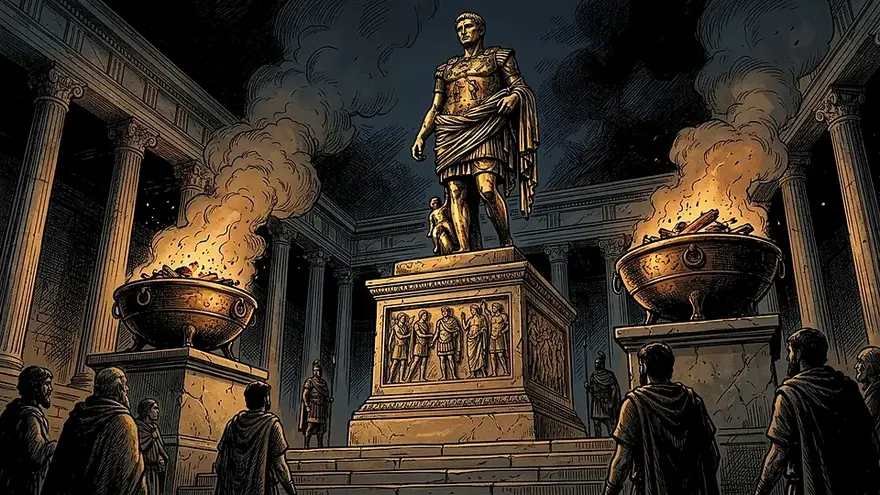
Hebrew gematria spells Greek ‘Neron Kaisar’ as 666—and Latin ‘Nero Caesar’ (dropping one letter worth 50) as 616, matching Papyrus 115.
Subscribe to @UnreadScripture for full-length illustrated documentaries on the Hebrew, Greek, and ancient manuscripts behind these passages.