The Hebrew Bible never mentions Adam having a first wife before Eve. The Hebrew word lilit appears only once in all of Scripture—in Isaiah 34:14—among wild desert animals, owls, and hyenas inhabiting the ruins of Edom, translated 'screech owl' (KJV) or 'night creature' (NIV/ESV). Historically, lilit derives from Mesopotamian wind/night spirits (lilitu / ardat lili), warded off for centuries on upside-down Babylonian Aramaic incantation bowls. The famous story of Lilith as Adam's rebellious first wife was invented more than a thousand years after Genesis in The Alphabet of Ben Sira (c. 700–1000 CE), an anonymous medieval collection of satiric folk tales trying to harmonize Genesis 1:27 with Genesis 2:22.
The single verse in the entire Bible where 'lilit' appears
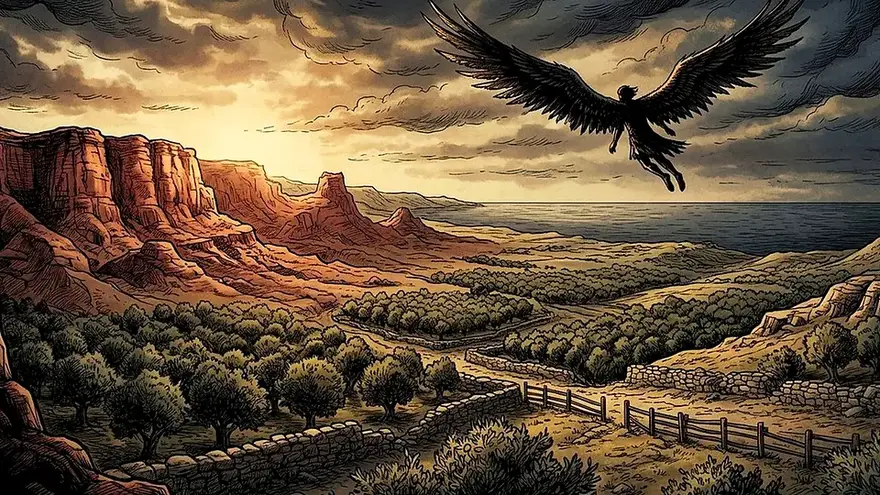
Search Genesis from start to finish and Lilith isn't there. Open Isaiah 34:14, however, where the prophet pictures thorns overgrowing the bombed-out palaces of Edom.
Alongside wildcats, hyenas, owls, and hawks sits the Hebrew word lilit—translated 'screech owl' in the King James Version and 'night creature' in modern Bibles.
Isaiah 34:14“Wildcats shall meet with hyenas... there also the night creature (lilit) settles and finds for herself a resting place.”
Why It Matters: Isaiah 34:14 is the sole verse in the entire Bible containing the Hebrew word lilit—describing desolate ruins in Edom with zero connection to Adam, Eve, or Eden.
Scrolls & Archaeology: In the Great Isaiah Scroll from Qumran Cave 1 (1QIsaᵃ, col. XXVIII, line 15, c. 125 BCE), the scribe wrote the plural form liliyot ('night-creatures/spirits'), matching Qumran's Songs of the Sage (4Q510 frag. 1, line 5) where lilit is grouped among desert terrors rather than treated as a primordial woman. Jerome's 400 CE Latin Vulgate rendered the noun lamia (a child-stealing monster of Greco-Roman folklore), bridging Mesopotamian lilitu wind-demons to medieval European legend.

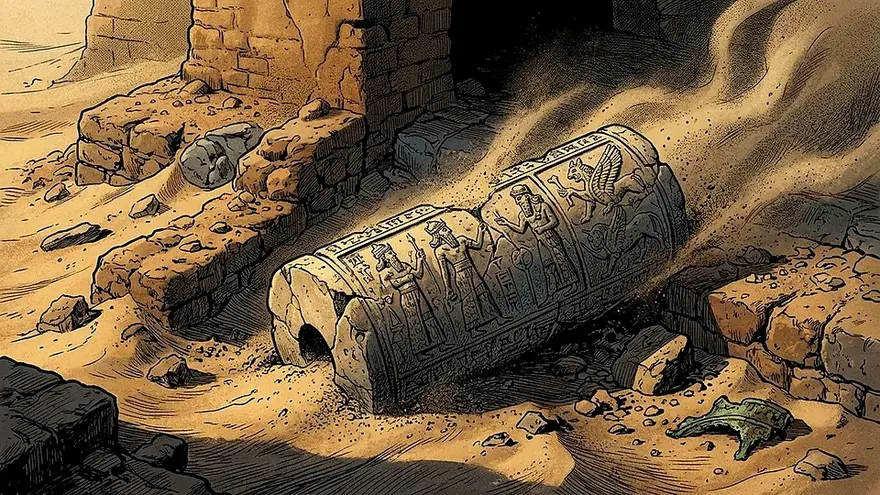
Upside-down Babylonian demon bowls buried under doorways
Long before anyone connected Lilith to Adam, Mesopotamian families feared wind-and-night spirits called lilitu.
Archaeologists in Iraq dug up hundreds of 5th–7th century CE clay bowls buried upside down under thresholds, inscribed in spiral Aramaic ink with angelic 'divorce writs' ordering night spirits out of the house.
Dead Sea Scroll 4Q510 ('Songs of the Sage')“And I, the Instructor, proclaim His glorious splendor so as to frighten and terrify all the spirits of destroying angels and lilith...”
Between 700 and 1000 CE: A medieval satire invents 'Adam's first wife'
Where did the story of Lilith refusing Adam come from? An anonymous medieval work called The Alphabet of Ben Sira (written ~700–1000 CE).
Notice how late and playful it is: trying to explain why Genesis 1:27 mentions male and female before Genesis 2:22 builds Eve, the medieval storyteller spun an origin legend for traditional 3-angel baby amulets (Senoy, Sansenoy, and Semangelof).
Genesis 2:23 (Adam's first words on seeing Eve)“Then the man said, 'This at last is bone of my bones and flesh of my flesh.'”

How Jerome's Latin Bible turned Isaiah's desert bird into a Greek monster
How did Western Europe ever hear of Lilith before medieval Hebrew folklore spread? Around 400 CE, Saint Jerome translated Isaiah 34:14 into Latin and rendered lilit as Lamia—a child-stealing phantom from Greek myth.
Twelve centuries later, the 1611 King James translators stripped the mythology back out and wrote 'screech owl.'
Isaiah 34:14 (1611 KJV)“The screech owl also shall rest there, and find for herself a place of rest.”
Lilith Across 3,000 Years of Texts
Separating ancient Isaiah 34 from a medieval satirical story written 1,500 years later.
| Era & Text | Approximate Date | Term Used | What the Text Actually Depicts |
|---|---|---|---|
| Mesopotamian Lore | 2000–600 BCE | lilitu / ardat lili | Storm-wind night spirits feared by households |
| Hebrew Bible (Isaiah 34:14) | 8th–6th c. BCE | lilit (1× only) | Wild night creature/owl nesting in ruined Edom |
| Latin Vulgate / 1611 KJV | 400 CE / 1611 CE | lamia / 'screech owl' | Mythic night phantom (Vulgate) vs. desert owl (KJV) |
| Alphabet of Ben Sira | 700–1000 CE | Lilith | Medieval folk satire inventing 'Adam's first wife' |
What to Remember
- In Isaiah 34:14, lilit sits in a poetic list alongside wildcats, hyenas, goat-demons (se'irim), and owls—not in Eden or any creation narrative.
- Dead Sea Scroll 4Q510–511 ('Songs of the Sage') lists lilith in the plural alongside desert spirits, still with zero connection to Adam.
- Archaeologists at Nippur unearthed hundreds of 5th–7th century CE Aramaic ceramic bowls inscribed with angelic 'writs of divorce' banishing lilit spirits from household thresholds.