The roughly 400 years between Malachi (~430 BCE) and Jesus's birth—called 'silent' only because Protestant Old Testaments pause prophetic canon there—were anything but quiet. Alexander the Great spread Koine Greek, Jewish scholars translated the Septuagint, Judas Maccabeus defeated Antiochus IV Epiphanes in 164 BCE (founding Hanukkah, John 10:22), Pharisees/Sadducees/Essenes split, and Rome conquered Judea under Pompey and Herod.
Single-page whiplash: Why Matthew 1 looks nothing like Malachi 4
Close the final page of Malachi around 430 BCE and survey the map: tiny Yehud is a quiet backwater province of the Persian Empire, speaking Hebrew and Imperial Aramaic, with zero synagogues, zero Pharisees, zero Sadducees, zero Sanhedrin, and zero Roman legions.
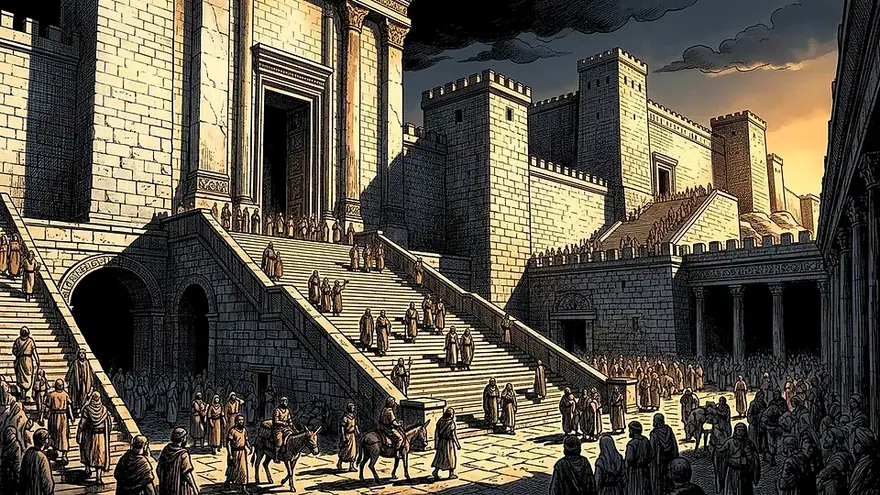
Now turn one thin blank divider page to Matthew 1–2. Suddenly Caesar Augustus rules the Mediterranean, half-Idumean King Herod rebuilds a colossal Temple, villagers gather in local synagogues, the New Testament itself is written in Greek, and rival Pharisees, Sadducees, and Herodians clash on every street corner. Four centuries of geopolitical earthquakes happened inside that blank page.
Luke 2:1 & Matthew 2:1“In those days a decree went out from Caesar Augustus... Now after Jesus was born in Bethlehem of Judea in the days of Herod the king...”
Why It Matters: Because Protestant Bibles removed 1 and 2 Maccabees from between Malachi and Matthew, millions of readers pass over 'the feast of the dedication' in John 10:22 without realizing Jesus is celebrating Hanukkah—an event from the '400 silent years'!
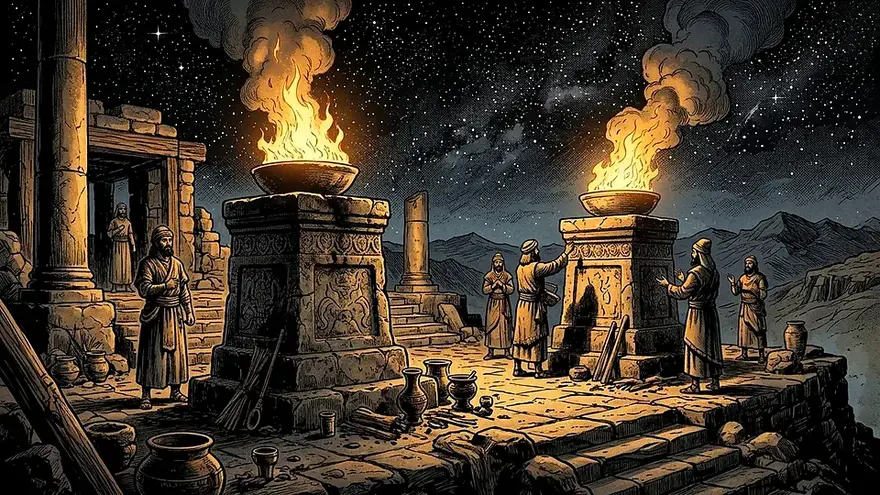
Scrolls & Archaeology: First Maccabees 4:44–46 preserves a striking detail about how Second Temple priests handled the 'silent years' when reclaiming the Temple in December 164 BCE: unsure whether to smash or reuse altar stones polluted by Antiochus IV's pig sacrifices, they stacked the stones in a corner of the Temple Mount 'until a prophet should come to tell what to do with them.' In John 10:36, standing at that exact winter festival, Jesus puns directly on Hanukkah's verb by calling Himself 'whom the Father consecrated (hēgiasen) and sent into the world.'
Alexander the Great (332 BCE) & Alexandria's Greek Septuagint Bible
The first earthquake struck in 332 BCE when 24-year-old Macedonian conqueror Alexander the Great swept away Persia and marched through Judea toward Egypt. Though Alexander died nine years later at Babylon, his generals carved up the Near East—Ptolemies ruling from Egypt, Seleucids from Syria—and planted common Greek (Koine) as the international language from Athens to Galilee.
Down in Alexandria, Egypt, a thriving diaspora community of Greek-speaking Jews could barely read classical Hebrew anymore. Starting around 250 BCE under Ptolemy II, Jewish scholars translated the Torah and Prophets into Greek—the Septuagint (LXX), the exact Bible New Testament authors quote over 300 times!
Daniel 8:21“And the goat is the king of Greece. And the great horn between his eyes is the first king.”
Pigs on the altar (167 BCE), Judas 'The Hammer,' and Jesus at Hanukkah
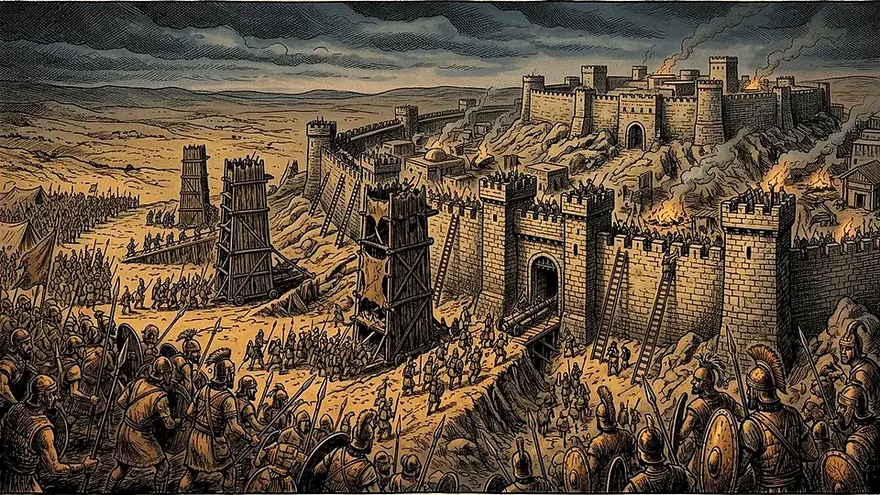
In 167 BCE, Seleucid king Antiochus IV Epiphanes ('God Manifest'—mocked by Jews as Epimanes, 'The Madman') decided to stamp out Jewish distinctiveness by force. As 1 Maccabees 1 and 2 Maccabees 6–7 recount, Antiochus outlawed circumcision and Sabbath, burned Torah scrolls, executed mothers with their infants, and erected a pagan altar ('the abomination that makes desolate') right atop YHWH's Temple altar.
Country priest Mattathias and his son Judas Maccabeus ('The Hammer') launched a daring guerrilla revolt in the Judean hills. Against giant Seleucid armies, Judas recaptured Jerusalem, tore down the polluted altar stones, and rededicated the Temple in winter 164 BCE—founding Hanukkah, which John 10:22 records Jesus walking through Solomon's Colonnade to observe!
1 Maccabees 4:59 & John 10:22“1 Macc 4:59 — 'Judas and his brothers... decreed that the days of the dedication of the altar should be observed with joy.' · John 10:22 — 'At that time the Feast of Dedication (ta enkainia) took place at Jerusalem.'”
Pharisees vs. Sadducees vs. Essenes—and Rome marching into the Holy of Holies
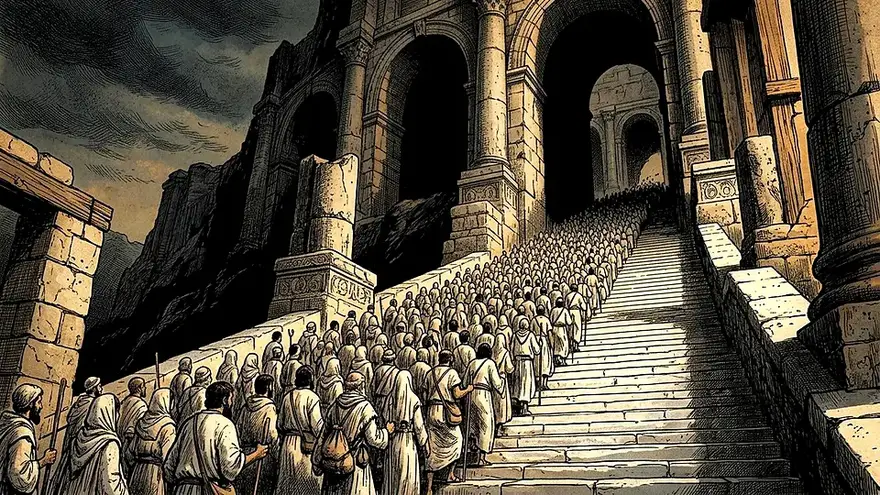
Once Judas's Hasmonean nephews claimed both the royal crown (meant for David's tribe) and the High Priesthood (meant for Zadok's line), Jewish society fractured into the rival groups Josephus describes: aristocratic Temple Sadducees allied with the priesthood, lay Torah-interpreting Pharisees teaching bodily resurrection in synagogues, and disillusioned Essenes retreating to Qumran's desert caves.
When two rival Hasmonean brothers foolishly invited Roman general Pompey to settle their civil war in 63 BCE, Pompey besieged Jerusalem, walked straight behind the veil into the empty Holy of Holies, and annexed Judea to Rome. Twenty-six years later, Rome crowned ruthless master-builder Herod the Great 'King of the Jews'—arriving right at Matthew 2:1.
Acts 23:7–8“A dissension arose between the Pharisees and the Sadducees... For the Sadducees say that there is no resurrection, nor angel, nor spirit, but the Pharisees acknowledge them all.”
Five Empires Over Jerusalem: From Malachi to Jesus
Catholic and Orthodox Bibles bridge part of this gap via 1–2 Maccabees, Sirach, and Wisdom; Jewish historian Flavius Josephus supplies the rest.
| Era / Ruling Power | Dates | Key Rulers | Lasting Impact on the New Testament World |
|---|---|---|---|
| 1. Persian (Achaemenid) | 539–332 BCE | Cyrus, Artaxerxes | Second Temple rebuilt; Ezra-Nehemiah; Aramaic replaces everyday Hebrew speech |
| 2. Greek / Ptolemaic | 332–198 BCE | Alexander, Ptolemy II | Hellenistic cities; Hebrew Scriptures translated into the Greek Septuagint (LXX) |
| 3. Seleucid Crisis | 198–164 BCE | Antiochus IV Epiphanes | 167 BCE persecution; martyrdom theology & bodily resurrection hope intensify |
| 4. Maccabean / Hasmonean | 164–63 BCE | Judas Maccabeus, John Hyrcanus | Jewish independence; Hanukkah founded; Pharisees, Sadducees & Qumran Essenes emerge |
| 5. Roman & Herodian | 63 BCE – 70 CE | Pompey, Augustus, Herod the Great | Roman taxation, crucifixions, expanded Herodian Temple, and Messianic expectation |
What to Remember
- Malachi closes inside a Persian province with no synagogues, Pharisees, or Romans; Matthew 1 opens inside Caesar's Greek-speaking Mediterranean world.
- In 167–164 BCE, Seleucid ruler Antiochus IV outlawed Torah and defiled Jerusalem's altar, sparking the Maccabean Revolt and Hanukkah—a festival Jesus celebrates in John 10:22.
- Competing responses to Greek culture and Hasmonean priest-kings birthed the exact factions Jesus debates in the Gospels: Pharisees, Sadducees, Essenes, and Herodians.