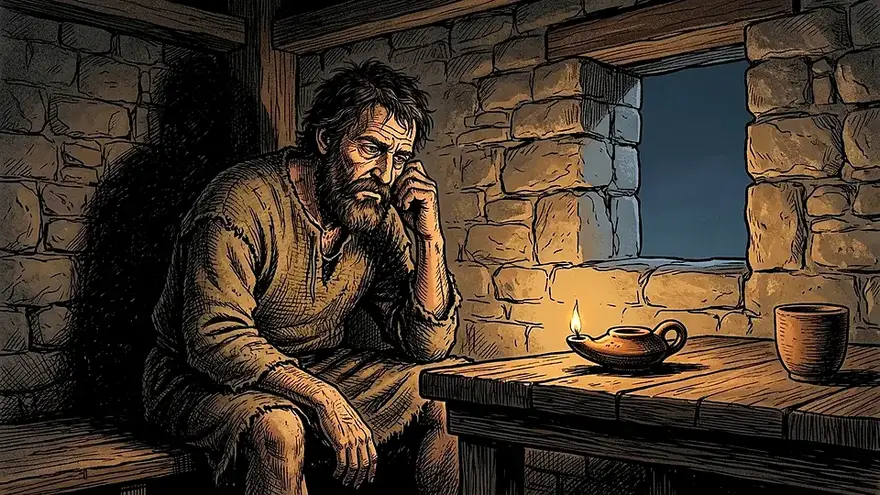
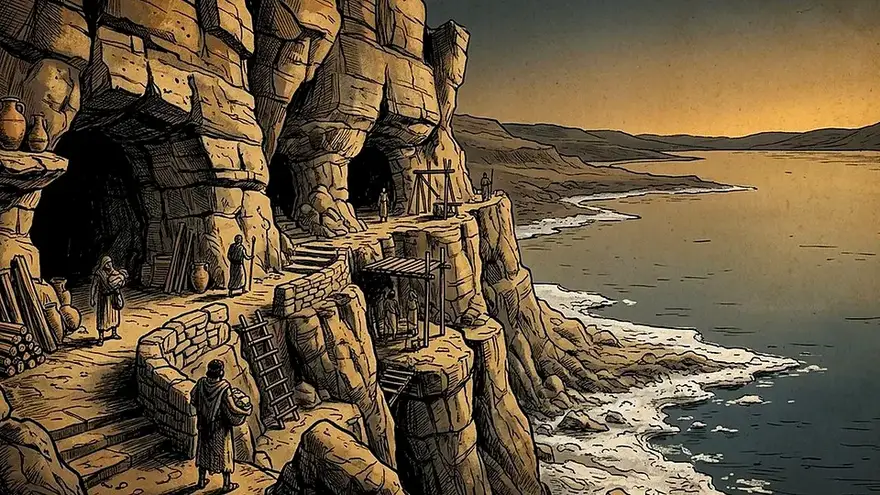
Between the twelve-year-old boy in Jerusalem's Temple (Luke 2:41–50) and His baptism around age thirty (Luke 3:23), the four Gospels summarize eighteen years in one verse: Luke 2:52. In Greco-Roman biography (bios), skipping unremarkable formative years to conserve costly papyrus space was standard literary practice—and Mark 6:3 confirms Nazareth neighbors knew Jesus continuously alongside His brothers and sisters as 'the tekton' (builder/craftsman in stone and timber). Archaeology places Nazareth an hour's walk from Herod Antipas's massive reconstruction of Sepphoris, while modern claims that Jesus traveled to India or Tibet trace entirely to Nicolas Notovitch's debunked 1894 travelogue.
Why ancient papyrus scrolls skipped everyone's twenties
After twelve-year-old Jesus debates teachers in Jerusalem's Temple, Luke fast-forwards eighteen years in thirteen words. Modern readers suspect a cover-up; ancient readers saw standard biography.
Even Plutarch's famous lives of Caesar and Alexander skip their quiet formative years to save expensive hand-copied scroll space for public deeds.
Luke 2:51–52“And he went down with them and came to Nazareth and was submissive to them... And Jesus increased in wisdom and in stature.”
Why It Matters: In tree-sparse Lower Galilee, a Greek tektōn worked primarily as a stonemason, quarryman, and heavy-beam builder rather than a cabinetmaker—a working-class status so scandalous to pagan critics that 3rd-century scribes altered Mark 6:3.
Scrolls & Archaeology: Around 177 CE, pagan philosopher Celsus mocked Christians for worshiping a village manual laborer, prompting Origen (Contra Celsum 6.36) to claim no Gospel copy in the churches actually called Jesus himself a carpenter—matching Chester Beatty Papyrus I (P45, c. 220 CE), which harmonized Mark 6:3 to 'the carpenter's son.' Earlier still, Samaritan native Justin Martyr (Dialogue with Trypho 88.8, c. 155 CE) preserved local Palestinian memory that Jesus fashioned agricultural plows and yokes (arotra kai zyga).
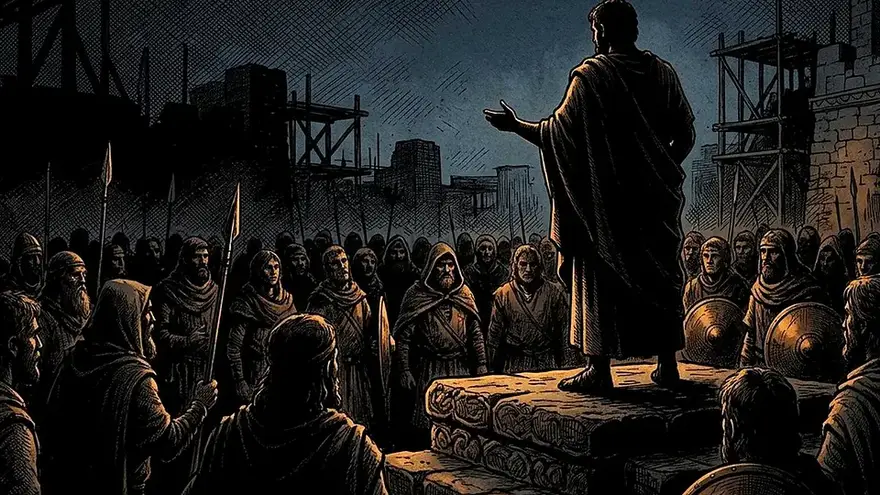
'Tekton' meant heavy stone-and-timber builder—right next to Sepphoris
When Jesus preaches in Nazareth at age thirty, neighbors aren't shocked that a long-lost traveler returned from Tibet—they're shocked because they've known Him and His family continuously as 'the tekton.'
In stony Galilee, wood was scarce; a tekton worked stone masonry and framing—just an hour's walk from Herod Antipas's massive reconstruction of the capital city Sepphoris.
Mark 6:3“'Is not this the builder (ho tekton), the son of Mary and brother of James and Joses and Judas and Simon? And are not his sisters here with us?'”
The 1894 Tibetan 'Saint Issa' hoax exposed at Hemis Monastery
Every modern claim that Jesus studied in India or Tibet traces back to a single 1894 bestseller by Russian journalist Nicolas Notovitch, who claimed monks at Hemis Monastery showed him ancient scrolls while he nursed a broken leg.
Within a year, Professor J. Archibald Douglas traveled directly to Hemis Monastery—where the head abbot signed a witnessed statement that no European with a broken leg had ever stayed there and no 'Issa' scrolls existed.
Luke 4:16“And he came to Nazareth, where he had been brought up. And as was his custom, he went to the synagogue on the Sabbath day.”
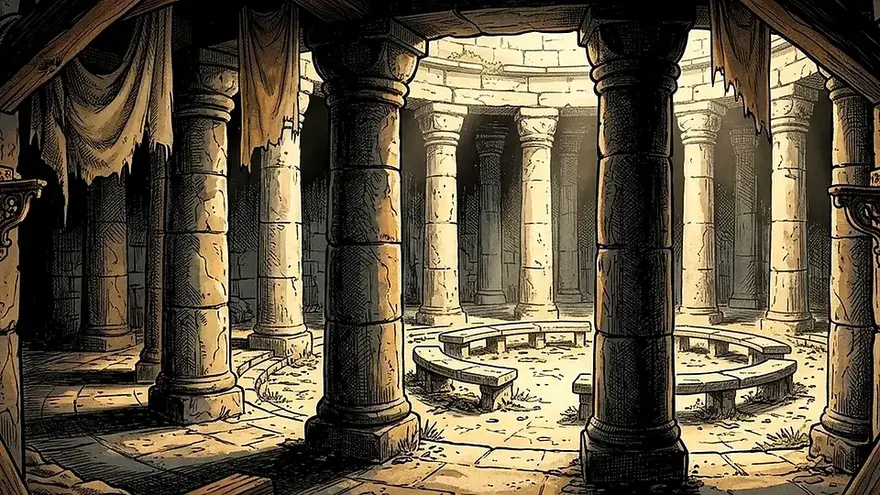
Glastonbury's medieval tin-merchant legend & William Blake's hymn
What about England's beloved legend that young Jesus sailed to Cornwall and Glastonbury with a tin-trading uncle, Joseph of Arimathea?
No ancient writer breathes a word of it for over a thousand years; the tale surfaced in medieval abbey lore after 1184 CE and became famous through William Blake's 1804 poem 'Jerusalem.'
Luke 2:40“And the child grew and became strong, filled with wisdom. And the favor of God was upon him.”
First-Century Galilean Evidence vs. Modern 'Lost Years' Myths
Comparing eyewitness first-century texts against 12th–19th century travel legends.
| Claim | Earliest Source Date | Key Evidence | Historical Verdict |
|---|---|---|---|
| Builder in Nazareth / Galilee | Mark 6:3 (c. 65–70 CE) | Townsfolk knew Him continuously as 'the tekton' | Strong 1st-century historical bedrock |
| Worked at Nearby Sepphoris | Josephus + Archaeology | 4 miles from Nazareth; rebuilt under Herod Antipas | Highly plausible economic context |
| Sailed to Glastonbury, England | Medieval Abbey Lore (post-1184 CE) | 1,150-year silence; popularized by Blake's 1804 poem | Medieval British legend |
| Studied in India / Tibet ('Issa') | Nicolas Notovitch (1894) | Debunked in 1895 by Hemis Monastery head abbot | Confirmed 19th-century literary hoax |
What to Remember
- A standard ancient papyrus scroll (~30–35 feet) held roughly the exact word count of Matthew or Luke, forcing biographers like Plutarch and the Evangelists to focus on public ministry.
- In rocky Lower Galilee, Greek tekton encompassed stonework, masonry, and heavy framing—right as Antipas rebuilt Sepphoris ('the ornament of all Galilee') four miles north of Nazareth.
- When Indologist Max Müller and Prof. J. Archibald Douglas investigated Hemis Monastery in Ladakh in 1894–1895, the chief lama signed a sworn statement that Notovitch's 'Life of Saint Issa' scrolls never existed.