
In Leviticus 16:8, Aaron casts two identical Hebrew lots: goral echad la-YHWH ('one lot for the LORD') and goral echad la-Azazel ('one lot for Azazel'). William Tyndale invented the English word 'scapegoat' in 1530 by reading Azazel as 'goat that departs,' while Second Temple texts like 1 Enoch 10:4 identified Azazel as a desert rebel spirit receiving Israel's banished sin—never a blood sacrifice.
Two identical goats, two bronze lots, and a grammatical shock in Leviticus 16:8
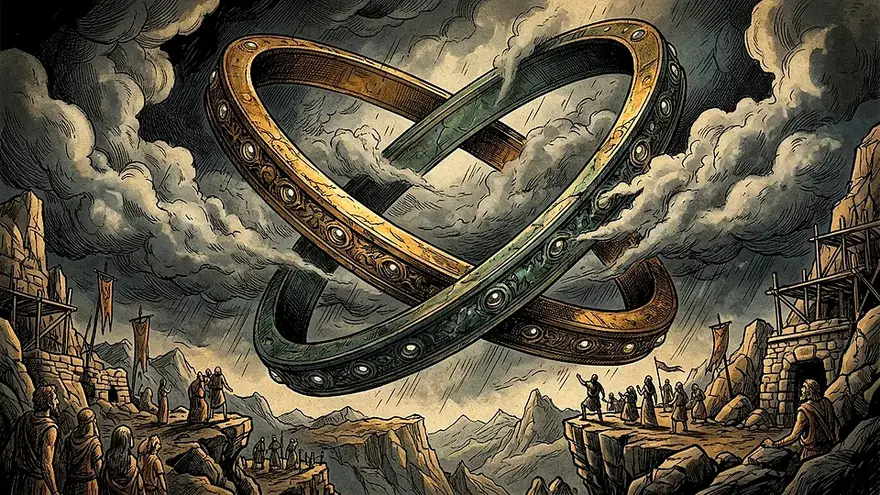
Every autumn on Yom Kippur, Israel's high priest stood at the Tabernacle entrance before twin male goats and shook two lots inside an urn. Leviticus 16:8 records the draw in razor-sharp Hebrew symmetry: goral echad la-YHWH we-goral echad la-Azazel ('one lot for the LORD and one lot for Azazel').
That identical preposition la- ('for / belonging to') stunned ancient and modern Hebraists alike. When Hebrew balances la-YHWH on the left side of an equation, grammar expects another personal name on the right—yet Azazel appears four times in Leviticus 16 and nowhere else in the Hebrew Bible.
Leviticus 16:8“And Aaron shall cast lots over the two goats, one lot for the LORD (la-YHWH) and the other lot for Azazel (la-Azazel).”
Why It Matters: William Tyndale coined the English compound 'scapegoat' ('escape-goat') in 1530 by splitting Hebrew 'Azazel into 'ez ('goat') + 'azal ('depart'), whereas exact Hebrew preposition parallelism ('for YHWH' // 'for Azazel') requires two parallel personal or spatial recipients.
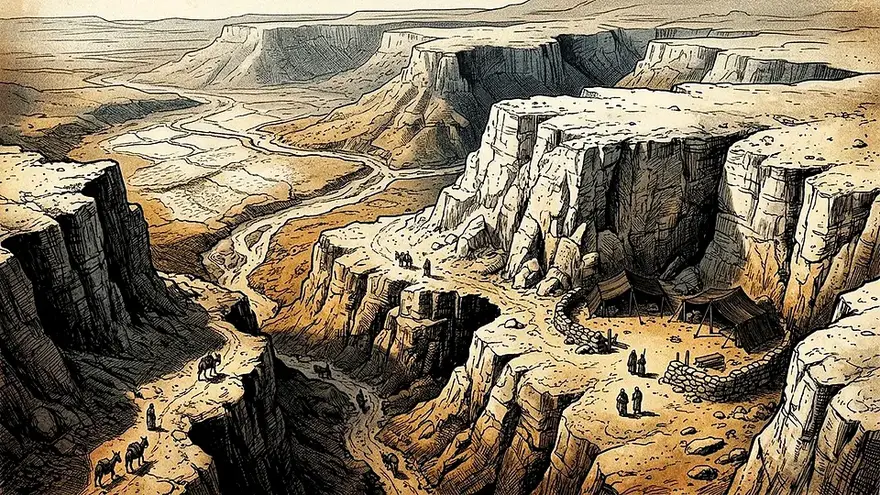
Scrolls & Archaeology: Qumran's Ages of Creation scroll (4Q180 frag. 1, lines 7–8) and the Temple Scroll (11Q19 col. XXVI) confirm Second Temple Judeans read 'Azazel (spelled 'Azaz'el with an 'aleph at Qumran) as the desert Watcher leader bound beneath jagged rocks in 1 Enoch 10:4–8—receiving banished impurity rather than blood worship. Mishnah Yoma 6:6–8 records that Jerusalem priests led the live goat twelve miles east into the Judean wilderness to the cliff of Bet Hadudo and pushed it backward so it could never wander back carrying Israel's sins.
How William Tyndale invented the English word 'scapegoat' in 1530
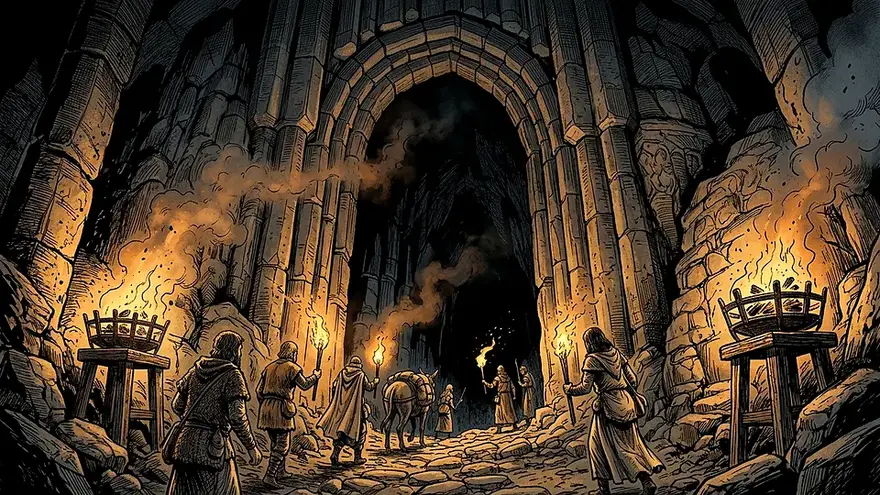
If Leviticus 16 actually says Azazel, where did the English word 'scapegoat' come from? Around 250 BCE, Greek Septuagint translators smoothed out the strange Hebrew noun as apopompaios ('the one sent away'), which Jerome's Latin Vulgate rendered caper emissarius ('emissary goat').
Translating the Hebrew Torah directly into English in 1530, Protestant reformer William Tyndale split Azazel into two Hebrew words—ez ('goat') plus ozel ('that goes away')—and coined 'escapegoate' for the very first time in English print. Meanwhile, rabbinic sages in Mishnah Yoma 6:8 read Azazel geographically as az-el ('fierce rocky crag'), describing the Judean cliff where the goat died.
Leviticus 16:10 (1611 KJV)“But the goat, on which the lot fell to be the scapegoat, shall be presented alive before the LORD, to make an atonement with him, and to let him go for a scapegoat into the wilderness.”
Dead Sea Scrolls & 1 Enoch 10: Azazel bound beneath jagged desert rocks
In Second Temple Judaism, readers had zero doubt Azazel was a personal being. Across Aramaic manuscripts from Qumran Cave 4 (4Q202, 4Q180, and the Apocalypse of Abraham), Azazel is the fallen angelic blacksmith who taught humanity warfare, swords, and vanity before Noah's Flood.
In 1 Enoch 10:4–8—written centuries before Jesus and directly echoing Leviticus 16's desert geography—God orders Archangel Raphael: 'Bind Azazel hand and foot, cast him into the darkness, and open the desert in Dudael and cast him there; throw upon him rugged and jagged rocks... to him ascribe all sin.'
1 Enoch 10:4, 8 (cf. Qumran 4Q202)“And again the Lord said to Raphael: 'Bind Azazel hand and foot, and cast him into the darkness: and make an opening in the desert, which is in Dudael... and to him ascribe all sin.'”

Why Leviticus 16 offers zero worship to Azazel—and subverts pagan rites
Does naming a desert spirit mean Leviticus 16 endorsed worshipping or bribing a demon? Look closely at the ritual choreography: only YHWH's goat is slaughtered, and only its blood enters the Holy of Holies to purge the sanctuary from Israel's rebellion.
Azazel receives no blood, no altar, no prayer, and no gift. Instead, Aaron presses both hands onto the live goat's head, confesses every transgression onto its hide, and ships Israel's moral toxic waste straight out to a barren no-man's-land (eretz gezerah)—returning chaos and guilt to the uninhabited desert wasteland where rebel powers dwell.
Leviticus 16:21–22“And Aaron shall lay both his hands on the head of the live goat, and confess over it all the iniquities of the people of Israel... The goat shall bear all their iniquities on itself to a remote area.”
Four Classic Ways Translators & Scholars Read 'Azazel'
Every major Jewish, Christian, and philological reading tries to explain the four occurrences of la-Azazel in Leviticus 16.
| Interpretation | Key Sources | How It Reads Hebrew 'Azazel' | Ritual Meaning on Yom Kippur |
|---|---|---|---|
| 1. Departing Goat ('Scapegoat') | Septuagint, Vulgate, Tyndale (1530), KJV | Compound of ez ('goat') + ozel ('departing') | Visual twin of YHWH's goat carrying forgiven sins out of sight |
| 2. Jagged Wilderness Cliff | Mishnah Yoma 6, Talmud Yoma 67b, Rashi | Az ('hard/steep') + el ('mighty cliff') | Rocky precipice in the Judean desert where the sin-laden goat perished |
| 3. Desert Rebel Spirit / Watcher | 1 Enoch 10, Qumran 4Q180/4Q202, Ibn Ezra, ESV/NRSV | Proper name matching la-YHWH in v. 8 | Mocking return of human sin and impurity back to its wilderness source |
| 4. Utter Removal (Abstract Noun) | BDB Lexicon, HALOT alternatives | Reduplicated root azal ('complete banishment') | Destination label: one goat for YHWH, one goat for total elimination |
What to Remember
- Leviticus 16:8 places YHWH and Azazel in strict grammatical symmetry ('for YHWH' / 'for Azazel'), sparking a 2,500-year debate over whether Azazel is a proper name, a cliff, or a title.
- William Tyndale coined the English noun 'scapegoat' in his 1530 Pentateuch by splitting Hebrew Azazel into ez ('goat') and ozel ('that departs').
- Unlike pagan rituals that bribed underworld powers with blood, Israel slaughtered only YHWH's goat and drove Azazel's live goat unharmed into the barren wilderness carrying impurity away.