When all twenty hardening verses in Exodus 4–14 are read in exact sequence rather than isolated quotes, a clear two-stage pattern emerges. Across the initial signs and the first five plagues (Exodus 7:13 through 9:7), God never once overrides Pharaoh's choice—Pharaoh repeatedly hardens his own heart even after breaking his promises to release Israel. Only at the sixth plague (Exodus 9:12) does the text state for the first time in real time that 'the LORD strengthened (chazaq) Pharaoh's heart,' ratifying and fortifying the trajectory Pharaoh had already chosen.
Plagues 1 through 5: Pharaoh hardens his own heart 100% of the time
God warns Moses ahead of time at the burning bush what will eventually happen. When the actual confrontations begin, however—staff into serpent, blood, frogs, gnats, flies, and livestock—God doesn't touch Pharaoh's will once.
Pharaoh begs for relief during the frogs and flies, promises freedom, and then breaks his word the moment the crisis passes.
Exodus 8:15, 32“But when Pharaoh saw that there was a respite, he hardened his heart and would not listen to them... Pharaoh hardened his heart this time also.”
Why It Matters: The original 1611 KJV mistranslated the Qal intransitive verb in Exodus 7:13 as 'And he hardened Pharaoh's heart' (quietly revised in later printings), hiding the fact that God never hardens Pharaoh's heart until Plague Six (9:12).
Scrolls & Archaeology: Exodus alternates three Hebrew roots—chazaq ('strengthen nerve'), qashah ('stiffen'), and kaved ('grow heavy,' 7:14; 8:15, 32)—as a direct polemic against Egyptian afterlife theology. In Spell 30B of the Egyptian Book of the Dead, inscribed on royal stone heart-scarabs, a pharaoh's heart (ib) was weighed on Osiris's balance scale against the ostrich feather of Ma'at, where a 'heavy' heart proved moral stubbornness and triggered condemnation.
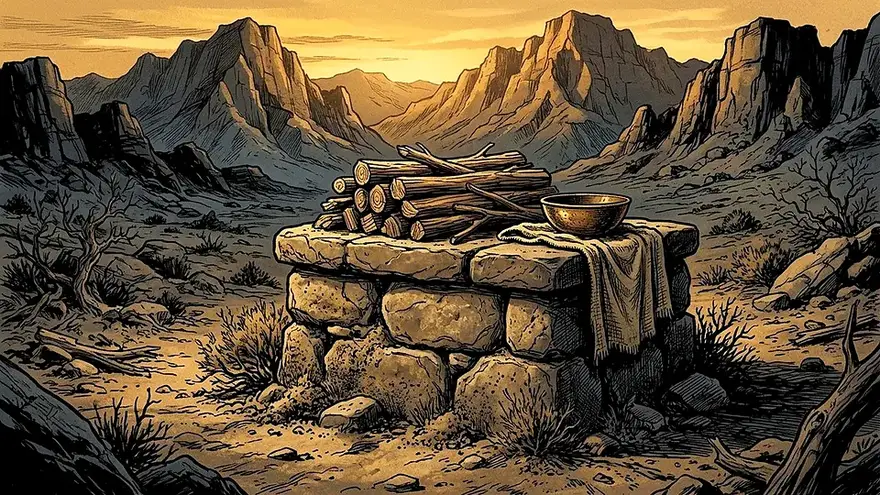
A secret jab at Egyptian afterlife religion ('Heavy Heart')
English Bibles use one word ('harden') for three different Hebrew verbs. One of them is kaved—literally 'to make heavy.'
In ancient Egypt's Book of the Dead, a pharaoh entered paradise only if his heart weighed lighter than the feather of truth (Maat). Every time Pharaoh makes his own heart 'heavy,' Exodus turns Egyptian theology against him.
Exodus 7:14 (Literal Hebrew)“Then the LORD said to Moses, 'Pharaoh's heart is heavy (kaved); he refuses to let the people go.'”
Plague 6 (Boils): Why God finally 'strengthens' Pharaoh's nerve
Only at Exodus 9:12—after five broken chances—does the narrator say for the first time in real time that the LORD acted on Pharaoh's heart.
And look at the Hebrew verb Exodus chooses whenever God acts: chazaq, meaning 'to strengthen' or 'give courage'—like stiffening a tyrant's spine so he doesn't fold purely from pain before his empire's cruelty is answered.
Exodus 9:12“But the LORD strengthened (wayyechazzeq) the heart of Pharaoh, and he did not listen to them.”
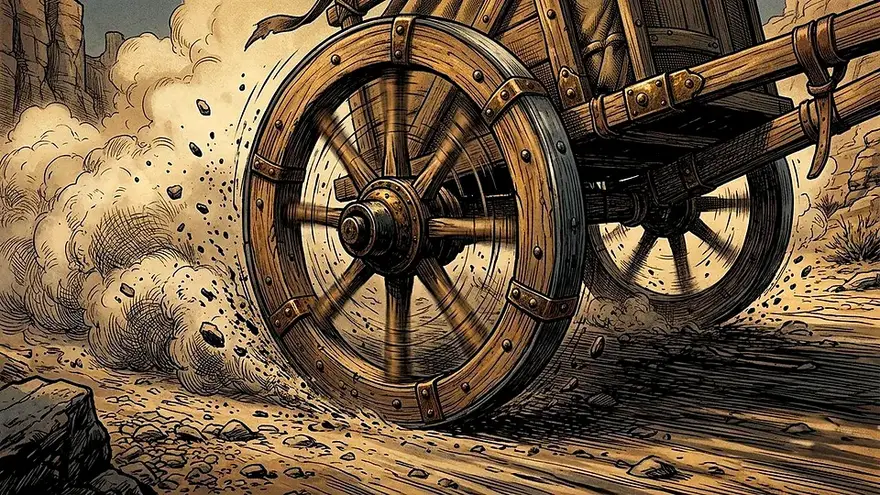
Why Egypt's own officials begged Pharaoh to stop before Plague 8
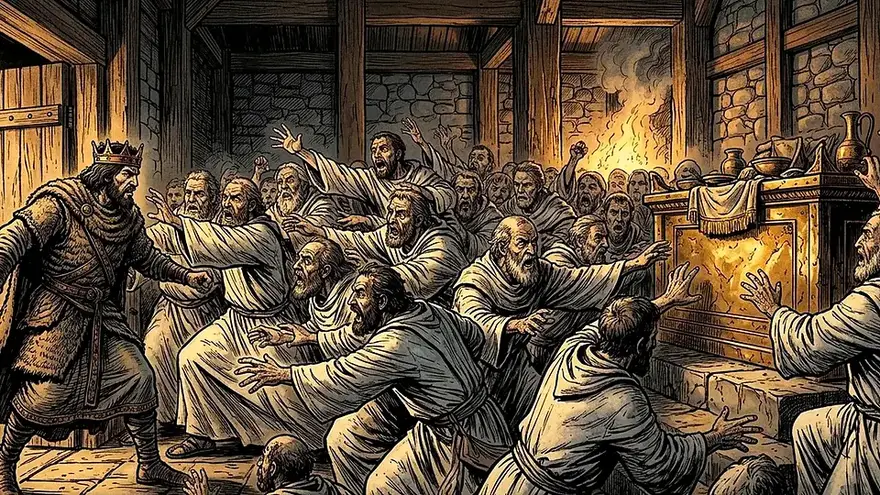
By Exodus 10:7, even Pharaoh's royal advisers lose patience with their own king and plead: 'How long shall this man be a snare to us? Do you not yet understand that Egypt is ruined?'
Rather than turning an innocent man wicked, God holds a defiant ruler steady on the collision course Pharaoh himself chose five times over.
Exodus 10:7“Then Pharaoh's servants said to him, 'Let the men go, that they may serve the LORD their God. Do you not yet understand that Egypt is ruined?'”
Who Actually Hardened Pharaoh’s Heart? (Track All 10 Plagues)
Look at the colors below: for the first five plagues in a row, God never hardens Pharaoh’s heart once. Tap any plague to see what the Hebrew says.
THE TURNING POINT: Only after 5 broken promises does God 'fortify' (chazaq) Pharaoh's nerve to stay on the road he chose.
Read the Full Story →Pharaoh's Heart Across the Ten Plagues
Reading Exodus 7–14 sequentially reveals a two-half structure.
| Plague Sequence | Who Hardens? | Dominant Hebrew Verb | Egyptian / Theological Meaning |
|---|---|---|---|
| Plagues 1–5 (Blood → Livestock) | Pharaoh himself | Kaved ('heavy') | Pharaoh weighs his own heart down against Maat |
| Plague 6 (Boils, Exod 9:12) | YHWH acts first time | Chazaq ('strengthen') | God fortifies Pharaoh's nerve so pride plays out |
| Plague 7 (Hail, Exod 9:34) | Pharaoh & servants | Kaved ('heavy') | Pharaoh still actively hardens himself after confessing |
| Plagues 8–10 (Locusts → Red Sea) | YHWH fortifies | Chazaq ('strengthen') | Imperial arrogance carried to public collapse |
What to Remember
- Hebrew Exodus uses three distinct verbs: kaved ('to make heavy,' echoing Egyptian Weighing-of-the-Heart imagery), qashah ('to make stiff/stubborn'), and chazaq ('to strengthen/fortify courage').
- Throughout Plagues 1–5, active hardening verbs have Pharaoh (or Pharaoh's own heart) as subject 100% of the time.
- When YHWH acts from Plague 6 onward, Exodus exclusively uses chazaq ('strengthened')—giving Pharaoh the nerve not to cave solely out of terror before Egypt's gods are exposed.