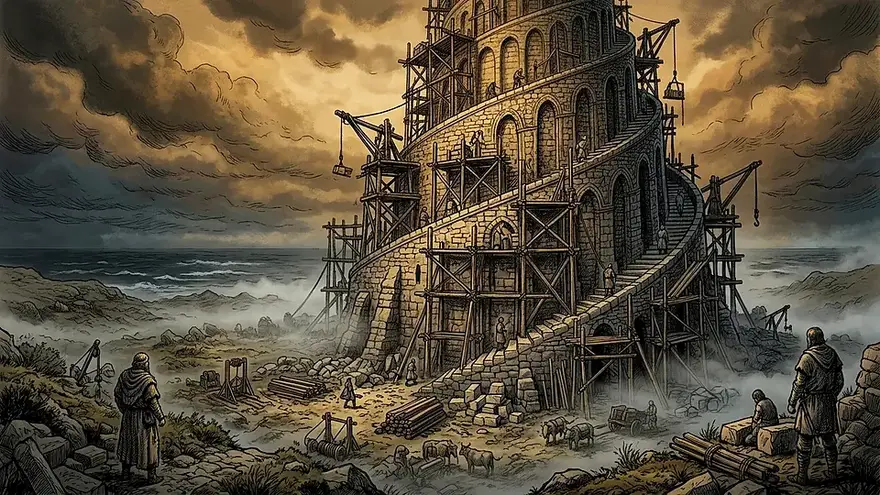
Genesis 11:1–9 isn't a naïve tale about people trying to climb into the clouds—it is razor-sharp Hebrew satire against Mesopotamian empire-building. The 'tower with its top in the heavens' describes a Babylonian ziggurat (like Babylon's 300-foot Etemenanki), a stepped brick temple stairway designed to summon a god DOWN to endorse one uniform empire instead of filling the earth.
Kiln-fired bricks & asphalt: eyewitness Mesopotamian engineering
Genesis 11:3 pauses to mock-admire the builders' breakthrough: 'Let us make bricks and burn them thoroughly! And they had brick for stone, and bitumen for mortar.'
In rocky Canaan, houses used limestone and mortar; on Iraq's flat river plain, stone didn't exist—only mud and black asphalt pitch. Firing bricks in kilns was expensive royal technology reserved for monumental temples.
Genesis 11:3“And they said to one another, 'Come, let us make bricks, and burn them thoroughly.' And they had brick for stone, and bitumen for mortar.”
Why It Matters: KJV inserted the italicized words 'may reach,' making ancient builders sound naive about atmospheric height, whereas Hebrew 'with its top in the heavens' quotes verbatim the standard Mesopotamian royal dedication title for a temple ziggurat.
Scrolls & Archaeology: German archaeologist Robert Koldewey excavated the massive mudbrick core of Babylon's seven-tiered ziggurat Etemenanki ('House of the Foundation of Heaven and Earth,' ~300 feet square) between 1899 and 1917, where Neo-Babylonian King Nabopolassar's foundation cylinder records Marduk's command to 'make its top rival the heavens' (rēšīšu šamê šannā). Notice Genesis 11:3 also mocks Babylonian construction materials: kiln-baked brick and bitumen mortar in alluvial Iraq where Judea's limestone bedrock did not exist.
A ziggurat wasn't for humans to climb up—it summoned gods down
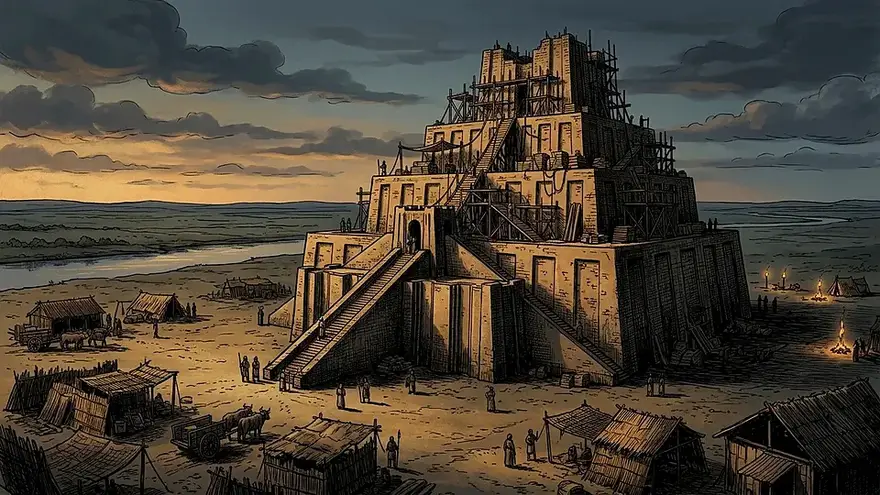
Archaeologist Robert Koldewey excavated Babylon's massive 300-by-300-foot mudbrick ziggurat foundation called Etemenanki ('House of the Foundation of Heaven and Earth').
Even the phrase 'its top in the heavens' appears word-for-word on real Babylonian royal bricks! Ziggurats were artificial sacred mountains built as a staircase so a deity would come down and bless the empire's capital.
Genesis 11:4“Then they said, 'Come, let us build ourselves a city and a tower with its top in the heavens, and let us make a name for ourselves, lest we be dispersed.'”
The comedic sting of verse 5 & the 'Bab-ilu / Balal' pun
Don't miss the dry humor in Genesis 11:5: humanity builds the tallest megastructure on earth 'with its top in the heavens'—and yet 'the LORD came DOWN to see the city and the tower.' From God's height, their monument is microscopic!
Then comes the bilingual punchline: Babylonians proudly called their city Bab-ilu ('Gate of the Gods'), and Genesis twists its sound into Hebrew balal ('confuse').
Genesis 11:5, 9“And the LORD came down to see the city and the tower, which the children of man had built... Therefore its name was called Babel, because there the LORD confused (balal) the language.”
How Acts 2 reverses Babel without erasing human languages
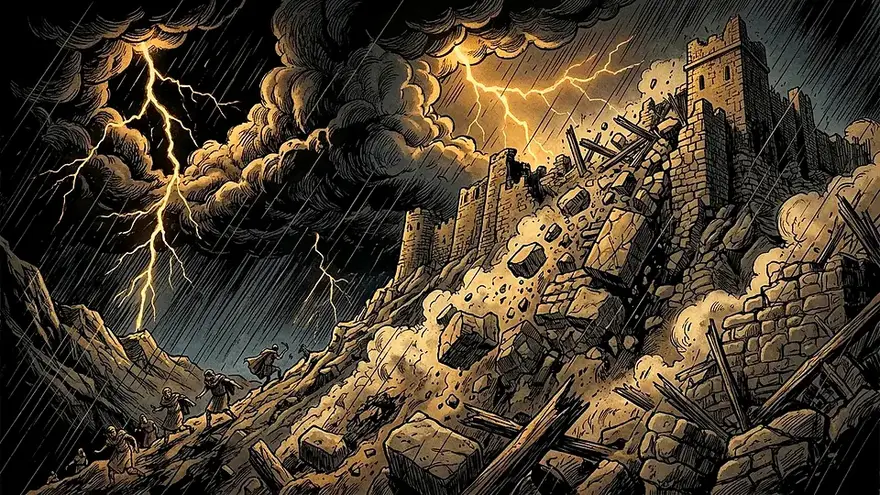
Notice why God scattered Shinar's empire: after the Flood, humanity was told to 'fill the earth' (Genesis 9:1), not huddle under one monoculture.
When God answers Babel at Pentecost in Acts 2, He doesn't force the crowd back into one imperial language—travelers from Mesopotamia, Egypt, and Rome hear the good news each in their own native tongue.
Acts 2:6, 9“Each one was hearing them speak in his own language... Parthians and Medes and Elamites and residents of Mesopotamia.”
Pop-Culture 'Skyscraper' Myth vs. Mesopotamian Ziggurat Reality
Reading Genesis 11 through real Iraqi archaeology.
| Detail in Genesis 11 | Childhood Picture | Ancient Mesopotamian Reality |
|---|---|---|
| 'Top in the heavens' (11:4) | Climbing into outer space | Standard temple-ziggurat royal title (Etemenanki) |
| Purpose of Stairway | Humans invading God's throne | Sacred ramp inviting a deity DOWN to bless empire |
| Kiln Bricks & Bitumen (11:3) | Ordinary building blocks | Expensive Mesopotamian royal monument technology |
| 'Name Babel' (11:9) | Neutral city name | Satirical pun turning Bab-ilu ('Gate of Gods') into balal ('Confusion') |
What to Remember
- Kiln-fired bricks & asphalt: eyewitness Mesopotamian engineering (Genesis 11:3).
- A ziggurat wasn't for humans to climb up—it summoned gods down (Genesis 11:4).
- The comedic sting of verse 5 & the 'Bab-ilu / Balal' pun (Genesis 11:5, 9).