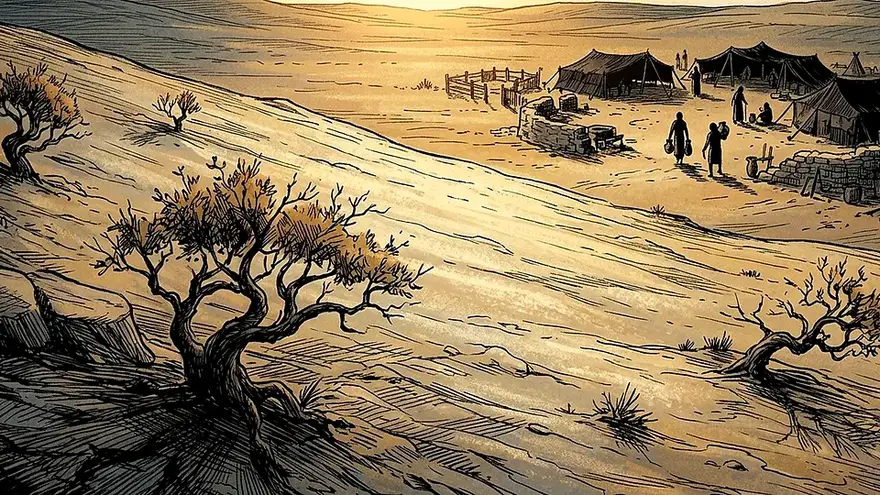
In Numbers 20:8, God instructed Moses to 'speak to the cliff' (dibbartem ’el-ha-sela‘) so water would pour out through calm divine speech alone. Instead, grieving Moses shouted 'Shall WE bring water for you rebels?' and struck the rock twice—misrepresenting God's holy character (lĕ-haqdisheni, v.12) before Israel, though he finally stood inside the land in Luke 9.
Two rocks, nearly forty years apart: Exodus 17 vs. Numbers 20
At first glance, barring Israel's greatest prophet from Canaan over tapping a boulder feels unbearably harsh—until you compare the Torah's two water-from-rock scenes side by side. In Year 1 at Rephidim (Exodus 17:6), God stood upon a low flint stone (צוּר, tzur) and ordered Moses to strike it once with the judicial staff that struck the Nile.
Nearly four decades later in Numbers 20:1–8, Moses's older sister Miriam has just died and been buried at Kadesh. When the younger generation riots for water, God tells bereaved Moses to take the priestly rod from the Tabernacle and simply speak (wĕ-dibbartem) to the towering cliff (סֶּלַע, sela‘).
Numbers 20:8“Take the staff, and assemble the congregation, you and Aaron your brother, and tell the rock (ha-sela‘) before their eyes to yield its water.”
Why It Matters: English Bibles use 'rock' for two different Hebrew geological nouns—low Horeb bedrock (tzur, struck once forty years earlier) and Kadesh's porous limestone cliff (sela', which God commanded Moses to address with calm speech alone).
Scrolls & Archaeology: Psalm 106:32–33 summarizes the Meribah tragedy by observing that Israel embittered Moses's spirit so that 'he spoke rashly with his lips' (wayevatte bisphatav)—pointing specifically to his angry boast in Numbers 20:10 ('Must WE bring water for you out of this cliff?'). Meanwhile, Deuteronomy 1:37 and 3:26 add Moses's own perspective, framing his exclusion from Canaan as vicarious leadership solidarity ('the LORD was angry with me also on your account').
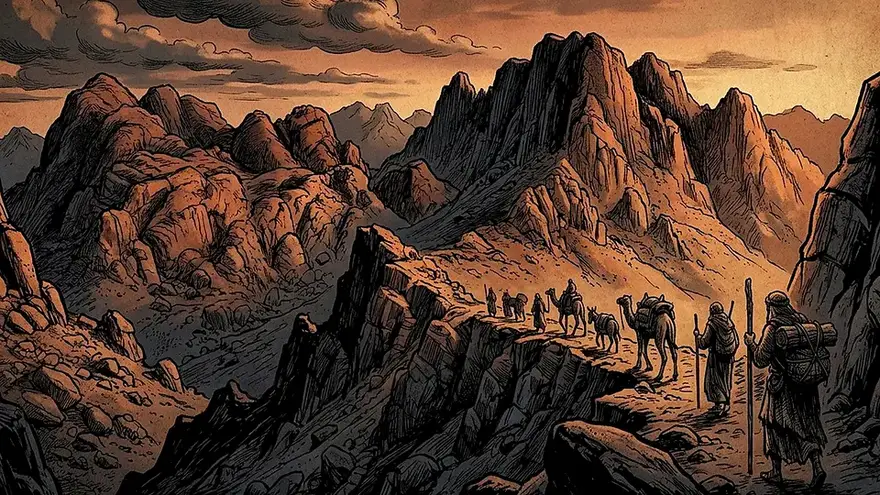
'Shall WE bring water for you rebels?' — Why verse 12 took it so seriously
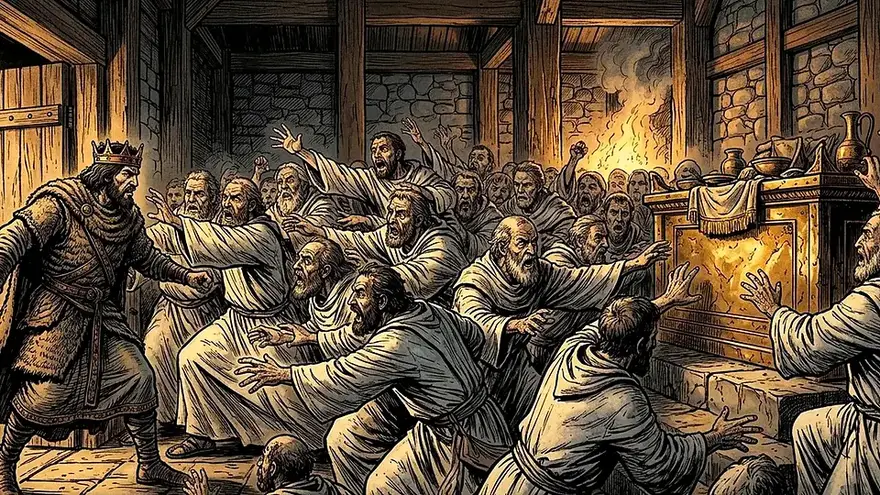
Watch everything unravel in Numbers 20:10–11 (remembered in Psalm 106:33 as the day Moses 'spoke rashly with his lips'). Boiling over with grief and exhaustion, Moses berates the crowd—'Hear now, you rebels! Shall WE bring forth water for you out of this rock?'—then lifts his arm and slams the cliff twice (pa‘amayim).
Water still gushes out, because God refuses to let thirsty families and livestock die over a leader's temper. Yet God's private verdict in verse 12 cuts deep: 'You did not trust Me, to uphold Me as holy (lĕ-haqdisheni) before Israel.' Turning free divine provision into violent, self-crediting rage painted YHWH as an explosive tyrant before the generation entering Canaan.
Numbers 20:10, 12“'Hear now, you rebels; shall we bring water for you out of this rock?' ... And the LORD said to Moses and Aaron, 'Because you did not believe in me, to uphold me as holy in the eyes of the people of Israel...'”
Why Deuteronomy adds 'The LORD was angry with me on your account'
Read ahead into Moses's farewell speeches in Deuteronomy 1:37, 3:26, and 4:21 and you hit an intriguing wrinkle: three times Moses tells Israel, 'The LORD was angry with me on your account (biglalĕkhem), and would not let me cross the Jordan.' Was Moses shifting blame?
Not at all—Deuteronomy captures the burden of prophetic solidarity. Back at the Golden Calf in Exodus 32:32, Moses begged to share his stubborn people's fate rather than enter glory alone. Dying east of the river on Mount Nebo (Deuteronomy 34:1–5) while Joshua ('YHWH Saves') leads the crossing shows Torah's lawgiver remaining bound to the wilderness generation to the end.
Deuteronomy 4:21 & Psalm 106:32–33“Deut 4:21 — 'The LORD was angry with me on your account.' · Ps 106:32–33 — 'They angered him at the waters of Meribah, and it went ill with Moses on their account, for they made his spirit bitter.'”
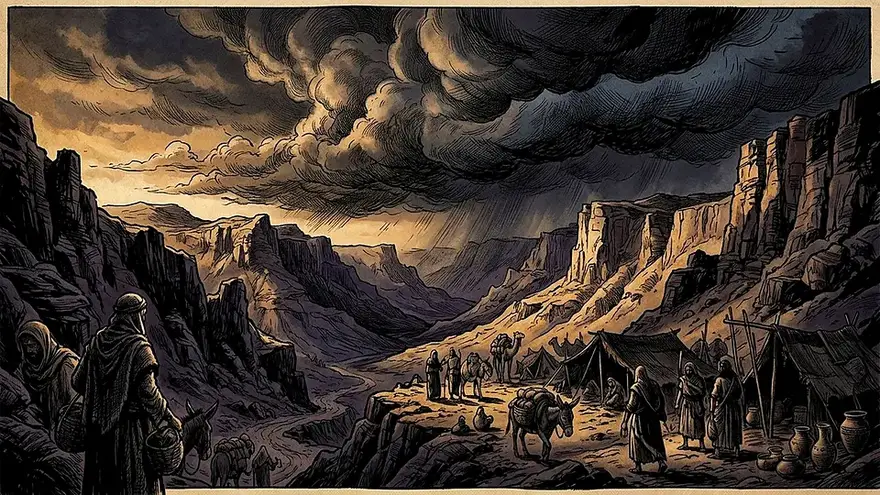
The 1,400-year postscript: Moses finally stands inside the Land
Deuteronomy 34 closes with tender intimacy rather than disgrace: 120-year-old Moses climbs Mount Pisgah with undimmed eyes, surveys Galilee, Jericho, and the Mediterranean horizon alongside God, and is buried by YHWH Himself in a secret Moabite valley.
Yet for Christian readers, Moses's story gets a breathtaking epilogue fourteen hundred years later. In Luke 9:28–31 (and Matthew 17:3), high on a mountain squarely inside the borders of the Promised Land at the Transfiguration, Moses finally stands on Israel's soil in radiant glory—talking face-to-face with Jesus about the greater 'departure' (Greek exodos, ἔξοδος) Jesus is about to accomplish in Jerusalem.
Luke 9:30–31“And behold, two men were talking with him, Moses and Elijah, who appeared in glory and spoke of his departure (exodos), which he was about to accomplish at Jerusalem.”
The Two Wilderness Rock Miracles Compared
Why Year 1 at Horeb required striking once while Year 40 at Kadesh required speaking.
| Feature | Exodus 17:1–7 (Rephidim) | Numbers 20:1–13 (Kadesh) |
|---|---|---|
| Timeline & Audience | Year 1 — newly freed slaves out of Egypt | Year 40 — second generation poised to enter Canaan |
| Hebrew Word for Rock | Tzur (צוּר, low bedrock / flint boulder) | Sela‘ (סֶּלַע, high fissured limestone crag) |
| God's Exact Command | 'Strike the rock' (once, with the Nile rod) | 'Speak to the rock' (holding the Tabernacle's budding rod) |
| Outcome for Moses | Faithful obedience; spring named Massah & Meribah | Strikes twice shouting 'Shall WE bring water?'; barred from crossing Jordan |
What to Remember
- Exodus 17 (Year 1: 'strike the flint rock once') and Numbers 20 (Year 40: 'speak to the limestone cliff') are two distinct miracles almost forty years apart.
- Numbers 20:12 pinpoints Moses's failure not as a minor ritual slip, but publicly distorting God's patient grace into a temper tantrum while claiming 'WE' produced the miracle.
- Fourteen centuries after dying on Mount Nebo outside the border, Moses finally stands inside the Promised Land beside Jesus at the Transfiguration (Luke 9:30–31).