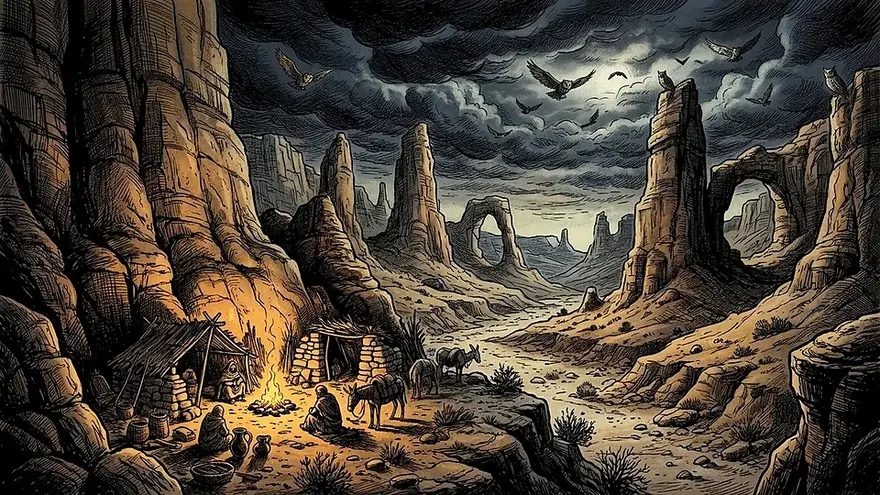
In Genesis 32:24–30, Jacob grapples in pitch darkness with an unnamed ’ish (אִישׁ, 'man') until dawn, yet receives the name Yisra’el ('Strives with God') and names the river ford Peniel ('Face of God'). Hosea 12:3–4 resolves the three titles: Jacob contended with ’Elohim through His mal’akh (מַלְאָךְ, heavenly messenger)—God meeting the lifelong schemer in tangible human form.
Midnight wordplay in the dust: Ya‘aqov, Yabboq, and ye’aveq
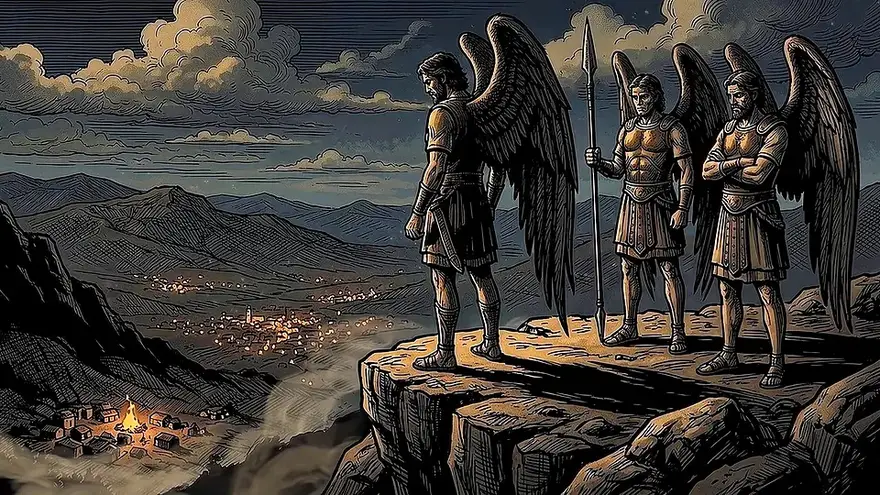
After twenty years on the run for stealing his twin brother's birthright and blessing, Jacob camps on the brink of disaster: Esau is marching toward him at sunrise with four hundred men (Genesis 32:6). Sending his wives, children, and flocks across the rushing Jabbok gorge in modern Jordan, Jacob stays behind alone in total darkness.
Listen to the Hebrew ear-rhyme literary scholar Robert Alter highlights in verses 22–24: Ya‘aqov (Jacob) stands beside the Yabboq (Jabbok) when a silent assailant ye’aveq (יֵאָבֵק, 'grapples/rolls in the dust,' from ’avaq, dust) with him till dawn—turning a lifetime of shadowy scheming into one raw midnight collision.
Genesis 32:24“And Jacob (Ya‘aqov) was left alone. And a man wrestled (ye’aveq) with him until the breaking of the day.”
Why It Matters: 1611 translators derived the verb sarita from the noun sar ('prince'), producing 'as a prince hast thou power,' whereas Hosea 12:3–4 confirms the verbal root sarah ('to wrestle / contend / persevere').
Scrolls & Archaeology: Genesis 32:22–25 weaves a breathtaking three-way Hebrew sound-play across the dark river gorge: Ya'aqov ('Jacob'), Yabboq ('Jabbok River'), and the unique Niphal verb wayye'aveq ('and a man wrestled / kicked up dust [avaq] with him'), found nowhere else in the Hebrew Bible. Hosea 12:4 adds an ironic twist on 'prevailed,' noting Jacob 'wept and sought his favor'—winning the blessing not by pinning God, but by refusing to let go.
Did God 'lose'—or hold back until a single fingertip touch?
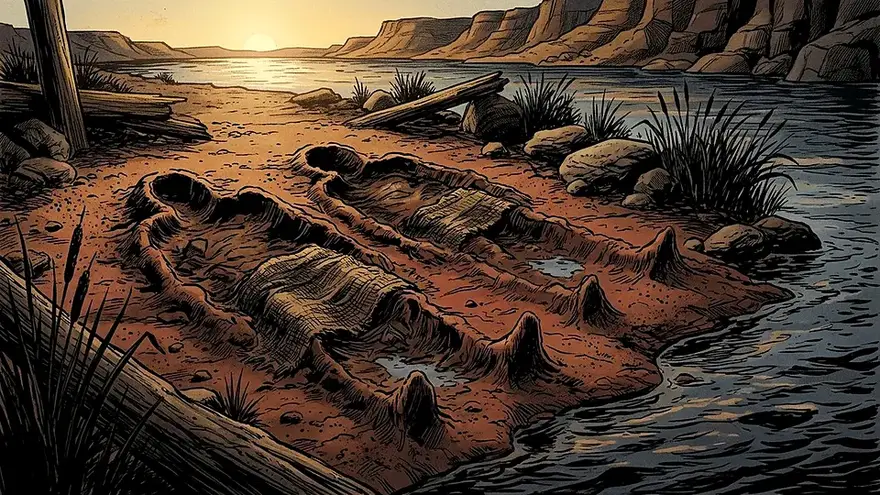
How could a middle-aged shepherd pin the Creator of galaxies for hours? Look closely at the verb in Genesis 32:25 when the stranger sees Jacob refusing to yield before daybreak: wayyigga‘ bĕ-kaf-yĕrekho—he merely 'touched' (not slammed or struck) the hollow of Jacob's thigh, instantly wrenching the strongest ball-and-socket joint in the human skeleton out of place.
That effortless touch gives away the whole match. Jacob's opponent restrained overwhelming might all night long to draw out Jacob's fight—then crippled the trickster's ability to run away so all crippled Jacob could do was weep, hang on, and beg for a blessing (Hosea 12:4).
Genesis 32:25–26“He touched his hip socket, and Jacob's hip was put out of joint as he wrestled with him... Jacob said, 'I will not let you go unless you bless me.'”
Man (’ish), Angel (mal’akh), or God (’Elohim)? How Hosea 12 links all three
Why does Scripture describe the midnight stranger three different ways? Genesis 32:24 narrates from Jacob's blind vantage point in the dark: someone solid grabs him—'a man' (אִישׁ, ’ish). By daybreak, the stranger reveals his true stature ('you have striven with God [’Elohim] and with men'), and stunned Jacob names the ford Peniel (פְּנִיאֵל, 'Face of God,' v.30).
Centuries later, the prophet Hosea reconciles both titles in two parallel poetic lines (Hosea 12:3–4): 'In his manhood he strove with ’Elohim; he strove with the angel (מַלְאָךְ, mal’akh) and prevailed.' As in Exodus 3:2–6 and Judges 13, the tangible Angel of YHWH embodies God's own personal presence.
Hosea 12:3–4 & Genesis 32:30“Hosea 12:3–4 — 'In his manhood he strove with God. He strove with the angel and prevailed; he wept and sought his favor.' · Gen 32:30 — 'I have seen God face to face.'”
Why the Bible's covenant people is named after a wounded wrestler
Before granting the blessing, the stranger asks a piercing question in verse 27: 'What is your name?' Twenty years earlier, disguised in goat skins, Jacob had lied to his blind father's face ('I am Esau,' Genesis 27:19); tonight he confesses the painful truth aloud: 'Ya‘aqov'—heel-grabber, supplanter, cheat.
Right there his identity is forged anew: Yisra’el (יִשְׂרָאֵל, 'Strives with God'). While neighboring empires boasted smooth names like Babylon ('Gate of the Gods'), Israel enters Scripture limping into the sunrise (Genesis 32:31)—defined forever as a people permitted to wrestle honestly with God and walk away blessed, humbled, and changed.
Genesis 32:27–28“And he said to him, 'What is your name?' And he said, 'Jacob.' Then he said, 'Your name shall no longer be called Jacob, but Israel, for you have striven with God and with men, and have prevailed.'”
Three Biblical Witnesses to Jacob's Opponent at the Jabbok
Why Genesis 32 and Hosea 12 use human, angelic, and divine language for the same encounter.
| Reference | Hebrew Title | Perspective | What It Reveals |
|---|---|---|---|
| Genesis 32:24 | ’Ish (אִישׁ, 'a man') | Jacob's sensory experience in pitch darkness | A tangible, physical body grappling in the river dust |
| Genesis 32:28, 30 | ’Elohim / Peniel ('Face of God') | Dawn revelation & new covenant name | To wrestle this stranger was to contend directly with God |
| Hosea 12:4a | Mal’akh (מַלְאָךְ, 'angel/envoy') | Prophetic theological commentary | God appeared via the embodied Angel of YHWH (cf. Exodus 3:2) |
| Genesis 32:32 | Gid ha-nasheh (sciatic sinew) | Israelite dietary memorial law | Physical limp preserved in kosher butchery down to modern times |
What to Remember
- Hebrew Genesis 32 weaves electric soundplay between Ya‘aqov (Jacob), Yabboq (the Jabbok gorge), and ye’aveq ('wrestled in the dust').
- God didn't 'lose' an arm-wrestling contest—a single fingertip touch (wayyigga‘) dislocated Jacob's hip socket, showing divine restraint turning grit into clinging dependence.
- Israel ('Strives with God') is the only ancient nation named not for triumphalist perfection, but for limping, honest perseverance with God.