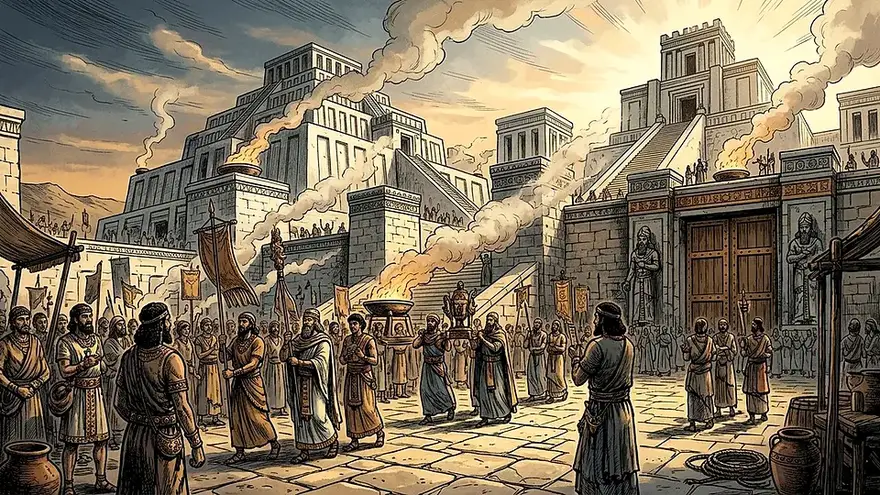
Although ripe summer figs (syka) were months away during April Passover ('it was not the season for figs,' Mark 11:13), Judean fig trees sprout edible green pre-figs (Hebrew paggim / Arabic taqsh) whenever spring leaves unfurl. A tree flaunting full green foliage with zero nodules was completely sterile—staging an enacted Jeremiah 8:13 parable wrapped directly around Jesus cleansing Jerusalem's outwardly lush, fruitless Temple.
Bertrand Russell's famous complaint—and walking out of 'House of Unripe Figs'
In his classic 1927 lecture Why I Am Not a Christian, British philosopher Bertrand Russell singled out Mark 11:12–14 as an indictment of Jesus's wisdom and virtue: hungry on a spring morning walk from Bethany, Jesus inspects a roadside fig tree, finds only leaves because 'it was not the season for figs,' and curses the tree to wither! Read like a modern grocery shopper in London, the scene sounds completely baffling.
Read on the eastern slope of Jerusalem's Mount of Olives—right beside Bethphage (Mark 11:1, literally Aramaic Beit Pagga, 'House of Unripe Green Figs'!)—every orchard farmer caught what Mark's Greek signaled immediately.
Mark 11:12–14“On the following day, when they came from Bethany, he was hungry. And seeing in the distance a fig tree in leaf (echousan phylla), he went to see if he could find anything on it. When he came to it, he found nothing but leaves, for it was not the season for figs.”
Why It Matters: Notice Mark does NOT say Jesus looked for summer figs (syka); Jesus looked for 'anything' (ti)—the starchy green spring buds (Hebrew paggim, Arabic taqsh) that Judean fig trees always push out with April Passover leaves, whose total absence proved the lush-looking tree was sterile!
Scrolls & Archaeology: Stationed in Galilee and Judea for decades, Scottish scholar William M. Christie documented in 1915 that Jerusalem-altitude fig trees (Ficus carica) sprout edible green taqsh nodules on last year's wood in late March right alongside leaves, eaten routinely by local fellahin two months before June's true syka harvest—and any leafy spring tree lacking taqsh will bear zero summer figs! Literarily, Mark splits the fig-tree episode into two halves (11:12–14 and 11:20–21) wrapped around 11:15–19's Temple cleansing—a classic 'Markan sandwich' (intercalation) enacting Jeremiah 8:13's judgment on fruitless Temple religion.
Judean fig botany: why April leaves advertise edible 'paggim / taqsh'
At Jerusalem's 2,500-foot elevation, Passover falls in April—two months before early summer figs (June) and four months before main-crop figs (syka, August). That is why Mark 11:13 notes 'it was not the season for [ripe] figs.' Why then did Jesus walk over upon spotting leaves 'from a distance'?
Unlike apple blossoms, Middle Eastern Ficus carica trees sprout small, green, edible fruit-knobs (Hebrew paggim, Song of Songs 2:13; Arabic taqsh) on last year's wood right alongside spring leaves! Travelers snacked on tart taqsh, and when a showy canopy of leaves hid zero nodules, farmers knew that tree was sterile all summer.
Song of Songs 2:13 & Micah 7:1“Song of Songs 2:13 — 'The fig tree ripens its early figs (paggeha).' · Micah 7:1 — 'Woe is me! For I have become as when the summer fruit has been gathered... my soul desires the first-ripe fig.'”
Mark's literary 'sandwich' wrapping the Temple cleansing inside the fig tree
Still, why curse a barren roadside tree—Jesus's lone destructive miracle across all four Gospels? Because Jesus was staging a live Hebrew prophetic sign-act (like Jeremiah smashing a clay jar in Jeremiah 19). Notice Mark's trademark 'Markan sandwich' (intercalation), where Story A wraps directly around Story B so each interprets the other:
Slice A1 (Mark 11:12–14): Jesus inspects a leafy, fruitless fig tree and pronounces judgment. Meat B (Mark 11:15–19): Jesus enters Jerusalem's Temple, overturns money-changers' tables, and condemns a den of robbers! Slice A2 (Mark 11:20–21): Next morning, disciples see the tree withered 'from the roots' (ek rhizōn).
Mark 11:15, 17, 20“And they came to Jerusalem. And he entered the temple and began to drive out those who sold and those who bought... 'Have you not read, My house shall be called a house of prayer for all the nations? But you have made it a den of robbers.' ... As they passed by in the morning, they saw the fig tree withered away to its roots.”
Jeremiah 8:13 enacted in real time: all Temple leaves, zero fruit
Every disciple raised on the Prophets knew what a withered fig tree meant. Before Babylon burned Solomon's Temple, Jeremiah 8:13 linked Temple corruption ('a den of robbers,' Jeremiah 7:11—quoted in Mark 11:17!) directly to a barren fig tree: 'There are no grapes on the vine, nor figs on the fig tree; even the leaves are withered!' (compare Hosea 9:16).
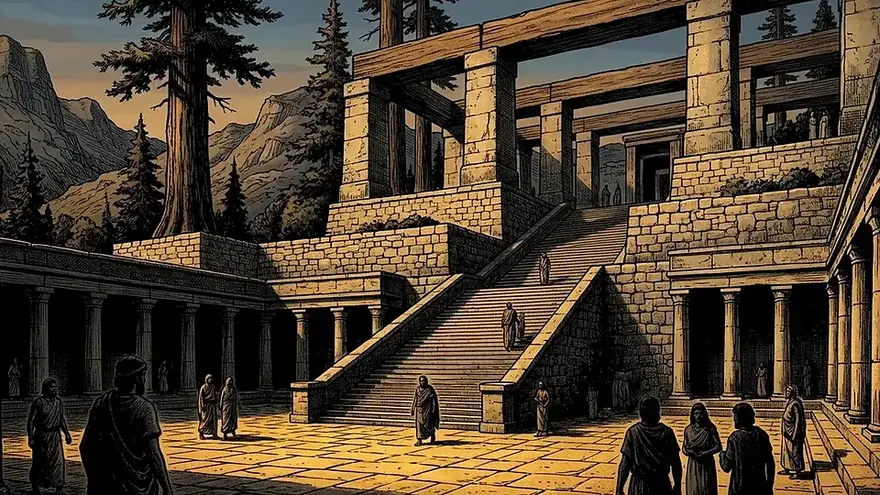
From the Mount of Olives, Herod's marble-and-gold Temple advertised lush spiritual vitality ('in leaf from afar') with Passover crowds, trumpets, and robes—yet up close yielded exploitation rather than covenant fruit. Within forty years in 70 CE, that Temple withered from the roots.
Jeremiah 8:13 & Hosea 9:16“Jeremiah 8:13 — 'There are no grapes on the vine, nor figs on the fig tree; even the leaves are withered!' · Hosea 9:16 — 'Ephraim is stricken; their root is dried up; they shall bear no fruit.'”
Decoding Mark 11:12–21: Botany + Prophetic 'Markan Sandwich'
How each half of the fig-tree sign-act mirrors what happens inside Herod's Temple.
| Mark 11 Section | Surface Action on the Road | Prophetic Meaning in Jerusalem |
|---|---|---|
| Slice A1 (11:12–13a) | Lush green fig leaves spotted from afar near Bethany | Herod's magnificent Temple gleaming with Passover bustle & ritual |
| Slice A1 (11:13b–14) | Up close: 'nothing except leaves' (zero early taqsh buds) | Up close: commercial extortion & barren covenant leadership |
| Center B (11:15–19) | Jesus halts Temple trade, quoting Isaiah 56:7 & Jeremiah 7:11 | Symbolic shutdown of corrupt Temple aristocracy's authority |
| Slice A2 (11:20–24) | Fig tree found withered 'from the roots'; prayer moves 'this mountain' | Foreshadows 70 CE end of the Temple mount sacrifice system |
What to Remember
- On Middle Eastern Ficus carica trees in early April, green edible fruit-nodules (paggim/taqsh) grow simultaneously with spring leaves—so full foliage with zero fruit signaled total barrenness.
- Mark deliberately splits the fig-tree story into two halves (Mark 11:12–14 and 11:20–21) and sandwiches the cleansing of Herod's Temple (11:15–19) right inside the middle to interpret both.
- Hebrew prophets from Jeremiah 8:13 to Hosea 9:10 and Micah 7:1 used a fruitless, leafy fig tree as their signature symbol for Jerusalem's corrupt Temple establishment.