In the two oldest complete Greek Bibles—4th-century Codex Sinaiticus and Codex Vaticanus—the Gospel of Mark stops abruptly at Mark 16:8 with the Greek words ephobounto gar ('for they were afraid'), after the angel announces Jesus has risen. Because church fathers Eusebius and Jerome confirmed almost all ancient Greek copies lacked verses 9–20, scholars recognize the Longer and Shorter Endings as 2nd-century scribal summaries.
Two words at sunrise: Where Codex Sinaiticus and Vaticanus stop cold
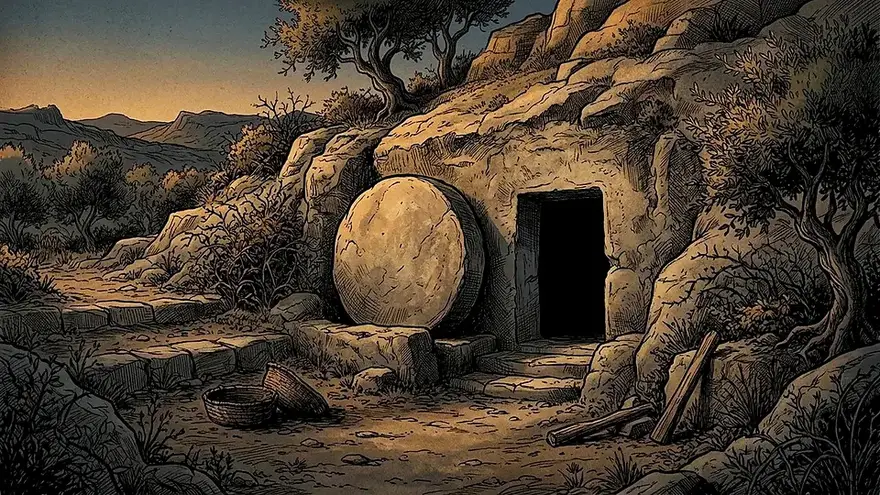
At dawn on Sunday in Mark 16:1–7, three women arrive at Jesus's rock-cut tomb, find the stone rolled back, and hear a white-robed messenger announce: 'He has risen; he is not here... go, tell his disciples and Peter that he is going before you to Galilee.'
Then comes verse 8: the stunned women flee trembling and 'said nothing to anyone, for they were afraid' (ephobounto gar). In the world's two oldest complete Greek Bibles—4th-century Codex Sinaiticus and Codex Vaticanus—Mark stops dead right there! Vaticanus even leaves a blank column beside 16:8, proving the scribe knew longer endings existed yet omitted them.
Mark 16:6, 8“'Do not be alarmed. You seek Jesus of Nazareth, who was crucified. He has risen; he is not here...' And they went out and fled from the tomb... and they said nothing to anyone, for they were afraid.”
Why It Matters: Ending an entire Greek book on the postpositive conjunction gar ('for...') startled 2nd-century copyists so deeply that at least two different scribal endings (a 34-word Shorter Ending and the 12-verse Longer Ending) were appended to smooth the cliffhanger.
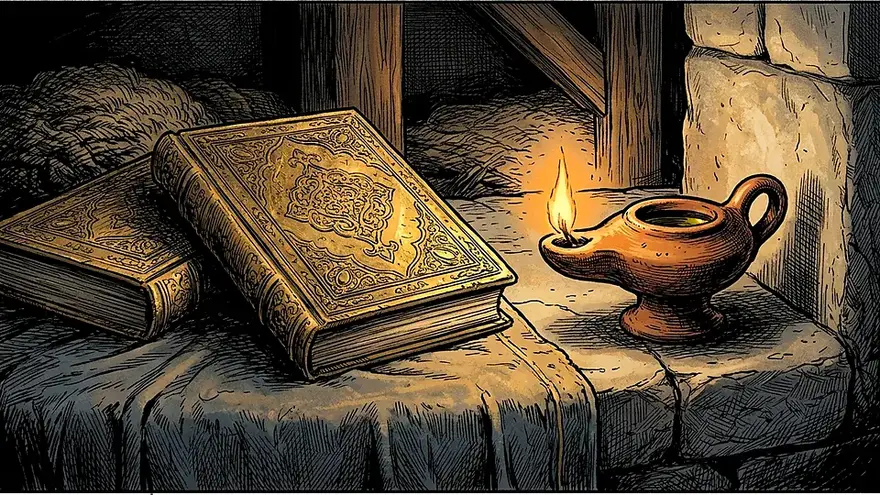
Scrolls & Archaeology: On page 1303 of 4th-century Codex Vaticanus (Vat. gr. 1209), the master scribe finishes Mark 16:8 partway down Column 2 and leaves the entire third column completely blank before starting Luke on the next page—the sole blank column in the entire New Testament of Vaticanus, proving the scribe knew longer endings existed yet deliberately excluded them. At Etchmiadzin in Armenia, a 989 CE Gospel manuscript (Matenadaran MS 229) inserts a red rubric between 16:8 and 16:9 attributing the Longer Ending to 'the Elder Ariston' (often linked to Aristion of Smyrna, c. 100 CE).
Not a modern conspiracy: Eusebius (325 CE) and Jerome (407 CE) said it first
Readers raised on the 1611 King James Bible (printed from late medieval Byzantine manuscripts) sometimes worry modern brackets in the ESV, NIV, CSB, or Catholic NABRE represent modern skepticism. In fact, ancient fourth-century bishops flagged Mark 16:9–20 over 1,600 years ago!
Around 325 CE, historian Eusebius of Caesarea wrote in Ad Marinum that 'almost all the copies' of Mark's Gospel in Greek ended at 'for they were afraid.' Eighty years later, Latin Vulgate translator Jerome repeated in Epistle 120.3 that 'almost all the Greek codices do not have this concluding passage'—a witness echoed by the Old Syriac Sinaitic manuscript, roughly 100 Armenian copies, and the two oldest Georgian Gospels.
Jerome, Epistle 120.3 (~407 CE)“Almost all the Greek codices do not have this concluding passage [Mark 16:9–20], especially since it seems to narrate strange things and contradictions.”
Snakes, poison, and four competing endings in the manuscript tradition
Ancient Greek manuscripts actually preserve four different endings for Mark: stopping at 16:8; a two-sentence 'Shorter Ending' reporting to Peter; the familiar 'Longer Ending' (16:9–20, cited by Irenaeus around 180 CE); and 5th-century Codex Washingtonianus inserting an extra dialogue ('Freer Logion') inside verse 14.
Read Mark 16:9–20 in Greek and the seam stands out sharply: verse 9 re-introduces Mary Magdalene ('from whom he had cast out seven demons') as if 16:1 hadn't just named her, uses seventeen non-Markan Greek words, and condenses scenes from Luke 24, John 20, and Acts—plus promises believers will handle serpents and drink deadly poison unharmed (16:18).
Mark 16:17–18 (Longer Ending)“And these signs will accompany those who believe: in my name they will cast out demons; they will speak in new tongues; they will pick up serpents with their hands; and if they drink any deadly poison, it will not hurt them.”
Torn final papyrus leaf—or the boldest cliffhanger in ancient literature?
If original Mark stopped at 16:8, why? Scholars split between two gripping reconstructions. Option One ('Lost Leaf,' favored by N.T. Wright and Bruce Metzger): ending a Greek narrative on the tiny conjunction gar ('for') is remarkably rare, and Mark 14:28 and 16:7 twice promise a Galilee reunion—suggesting the outer leaf of Mark's master codex tore off early.
Option Two ('Intentional Cliffhanger'): throughout Mark, healed crowds told to stay silent blab everywhere, while at the empty tomb women told to speak flee in awe-struck silence! Stopping on fear drops the unfinished commission straight into the reader's lap: Will you stay silent, or speak?
Mark 16:7“But go, tell his disciples and Peter that he is going before you to Galilee. There you will see him, just as he told you.”
The Four Endings of Mark in Ancient Manuscripts
Notice that whether Mark ends at verse 8 or verse 20, Jesus's bodily resurrection and empty tomb are already proclaimed inside Mark 16:6.
| Ending Variant | Key Manuscript Witnesses | Length | Defining Features |
|---|---|---|---|
| 1. Ends at Mark 16:8 | Codex Sinaiticus (א), Vaticanus (B), Old Syriac (syr^s), Eusebius, Jerome | 0 extra verses | Stops on ephobounto gar ('for they were afraid'); earliest textual witness |
| 2. Shorter Ending | Codex Bobbiensis (it^k, alone); L, Ψ, 099 (paired before 16:9) | ~35 Greek words | Brief two-sentence bridge saying the women reported promptly to Peter |
| 3. Longer Ending (16:9–20) | Codex Alexandrinus (A), Ephraemi (C), Bezae (D), Irenaeus (~180 CE), KJV | 12 verses (166 words) | Digest of Mary Magdalene, two walkers, Great Commission, snakes & poison |
| 4. Freer Logion Expansion | Codex Washingtonianus (W, 5th c., preserved at Smithsonian) | 12 verses + 1 paragraph | Expands v. 14 with disciples blaming 'this age of lawlessness' under Satan |
What to Remember
- Mark 16:1–8 already proclaims the empty tomb and bodily resurrection ('He has risen; he is not here'), stopping where the stunned women flee trembling.
- Fourth-century Codex Sinaiticus, Codex Vaticanus, Eusebius, and Jerome all attest that the earliest Greek manuscripts ended at verse 8 without verses 9–20.
- Second-century scribes uncomfortable with Mark's cliffhanger attached either a 35-word Shorter Ending or the familiar 12-verse Longer Ending (16:9–20) compiled from the other Gospels and Acts.